 Montevideo City Guide
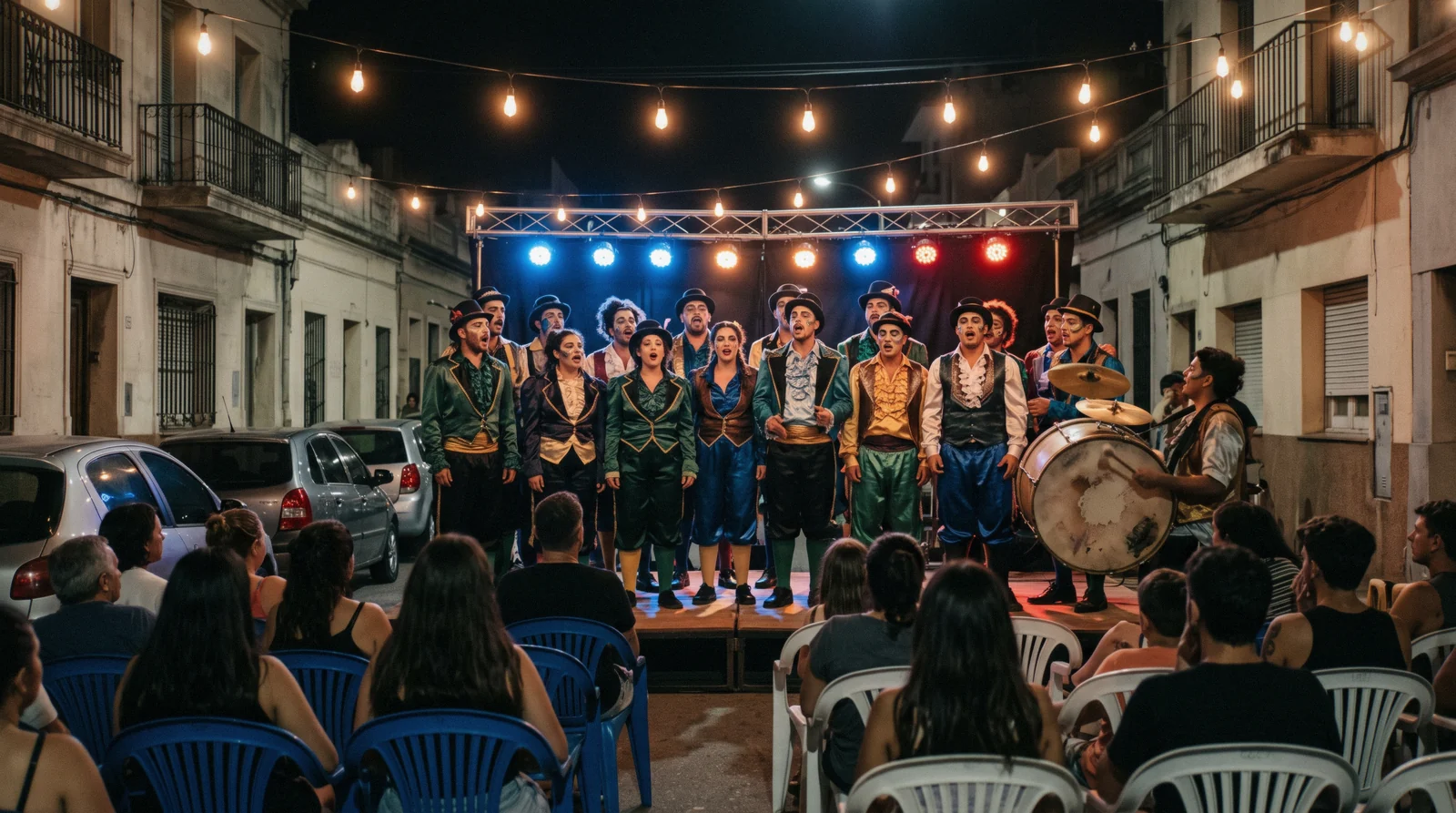
Carnival in Uruguay: How Montevideo's Forty Days Work
Montevideo's 40-day season is the carnival Uruguay waits for all year: it runs from late January into March, and it is a carnival of stages more than of parades. This page gives you the order of the season, the two big parades, the contest at Teatro de Verano and the neighbourhood tablados, the five contest categories, how tickets work, and what you can still see if you come in any other month. It sits alongside our guide to things to do in Montevideo for the daylight hours.
Quick answer When it is, what to see, how to get in
Uruguay's carnival lasts more than 40 days, from late January into March, and about fifty groups compete at Teatro de Verano. Two parades open the season, the inaugural parade along 18 de Julio and the Llamadas along Isla de Flores. After that the nights belong to the stages. A visitor with one night picks a tablado. A visitor in early February picks the Llamadas.
Key takeaways
- The Llamadas parade puts more than 2,500 candombe drums on Isla de Flores over two nights in early February, with more than 6,000 people marching ten blocks. Learn what the rhythm means in our candombe guide.
- Out of season you can still hear the drums. Visit the Museo del Carnaval by the port or book the candombe and tango dinner show at $107 for a full evening of carnival music.
- The contest happens at Teatro de Verano, the open-air amphitheatre in Parque Rodó, where tickets are numbered and sold through the Abitab network.
- Carnival weeks are also beach weeks, so book a base early and compare the areas on Montevideo hotels.
How the Carnival Season Runs
The season moves in a fixed order, from the inaugural parade at the end of January to the final verdict of the contest in March. The table sets it out month by month.
The order below repeats every year. The city fixes the exact nights each season and publishes them on its carnival page.
| When | What happens | Where | Cost to watch |
|---|---|---|---|
| Late January, a Thursday | Desfile Inaugural, all five categories | 18 de Julio, Plaza Independencia to Plaza Cagancha | Free on the pavement, paid seats |
| Early February, two nights | Desfile de Llamadas, comparsas only | Isla de Flores, Barrio Sur and Palermo | Free on the pavement, paid boxes |
| February into March | Concurso Oficial, about fifty groups | Teatro de Verano, Parque Rodó | Paid, numbered seats |
| Late January to March | Tablados and escenarios populares | Clubs, squares and mobile stages | Paid tickets, city stages at affordable prices |
| October and November | Admission rounds and Murga Joven | The Prado, Teatro de Verano, Las Duranas | Murga Joven free |
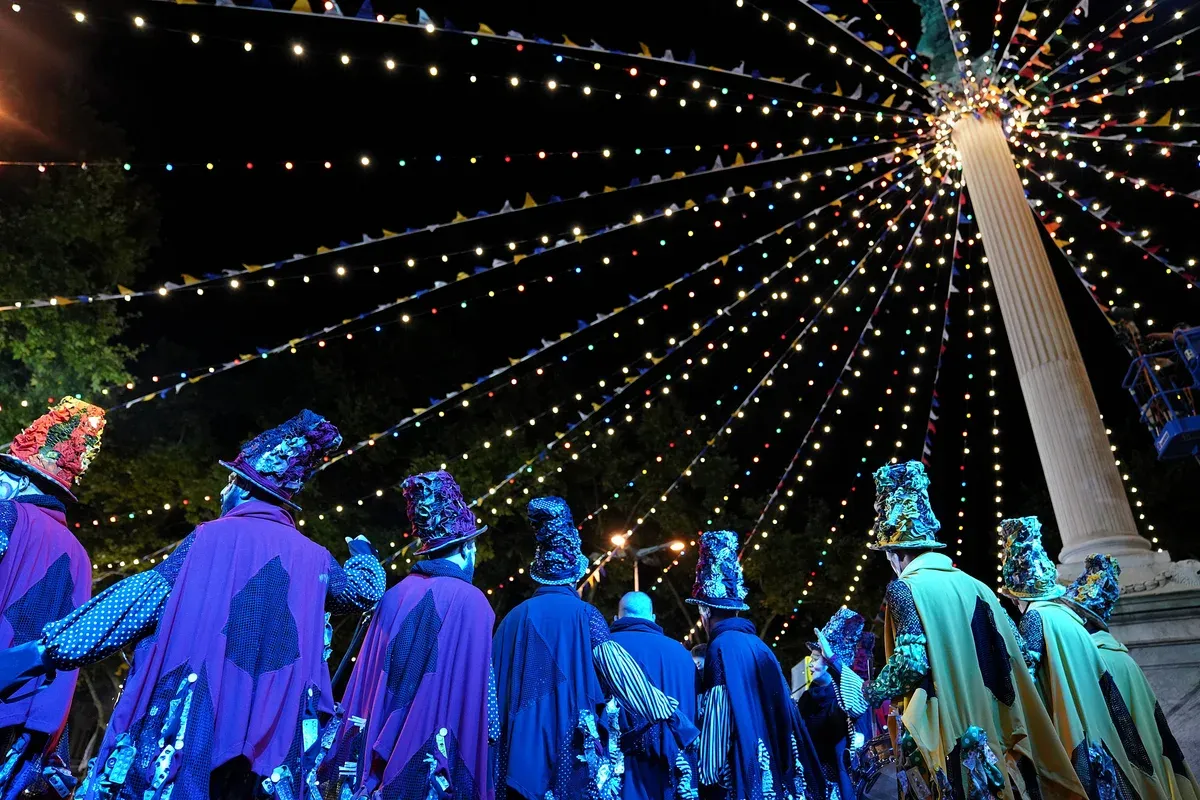
A murga under the lights of the 2019 Desfile Inaugural on Avenida 18 de Julio. Photo: Wikimedia Commons, CC BY-SA 4.0, via Wikimedia Commons
Late January: the Desfile Inaugural
The season opens on a Thursday at the end of January with the Desfile Inaugural, a parade along Avenida 18 de Julio from Plaza Independencia to Plaza Cagancha, starting at 20:00. Groups from all five contest categories march, joined by floats, cabezudos (the oversized carnival heads) and the queens of carnival, of the Llamadas and of the samba schools. Most people watch free from the pavement.
Paid seating is sold through the Abitab network, with boxes at Plaza Cagancha. The parade is also broadcast on the city's TV Ciudad and Antel TV channels, so a screen works as a fallback if you would rather skip the crowds.
Early February: the Desfile de Llamadas
The Llamadas is the parade that gives carnival in Uruguay its sound. It runs over two nights in early February along Isla de Flores through Barrio Sur and Palermo, with more than 2,500 drums and more than 6,000 people marching the 10 blocks between Héctor Gutiérrez Ruiz and Minas. Only comparsas, the candombe groups, take part.
The first night features the best-placed groups of the previous year, the second night the groups that passed the admission round. Tourist boxes with hosts, toilets and security are sold along the route, and paid seats line the street. Isla de Flores closes to traffic on parade days, with parking bans on nearby streets from 8:00, so plan to arrive on foot.
Our candombe guide explains the drum tradition behind it.
February into March: the Concurso Oficial
About fifty groups compete in rounds at Teatro de Verano through February and into part of March, in the official contest that the inaugural parade opens and the final verdict closes. Tickets are sold in advance at Abitab outlets, and any remainder goes on sale each night at the theatre box office. Seats are numbered, so a ticket buys you a fixed place in the open-air stand.
Bring a layer, because the theatre is open-air by the river. Rain moves a night to another date rather than cancelling it, so confirm the schedule the same evening before you set out.
Source: Descubrí Montevideo, Desfile de Llamadas, Intendencia de Montevideo.
Three Bookable Ways to Hear the Drums
The parades and tablados are bought at Abitab or on the door. These three outings are the ones you can book ahead, compared on what each gives a carnival-minded visitor.
| Outing | Length | Listed price | Best for | Book |
|---|---|---|---|---|
| Candombe, tango and folklore dinner show | About 3 hours | $107 | Any night of the year, with dinner | Check Availability |
| Private old-town walk with a drum class option | 2.5 hours | $129 per group | Families who want to play a rhythm | Check Availability |
| Shared city tour for cruise passengers | 3-4 hours | $39.20 | A cruise call, with candombe's roots in the commentary | Check Availability |
Prices as the operators list them. Figures current {checked}.
Carnival Music You Can Book
Outside the forty days, and on nights when the stages are dark, these three outings bring the drums and the history to a fixed time.
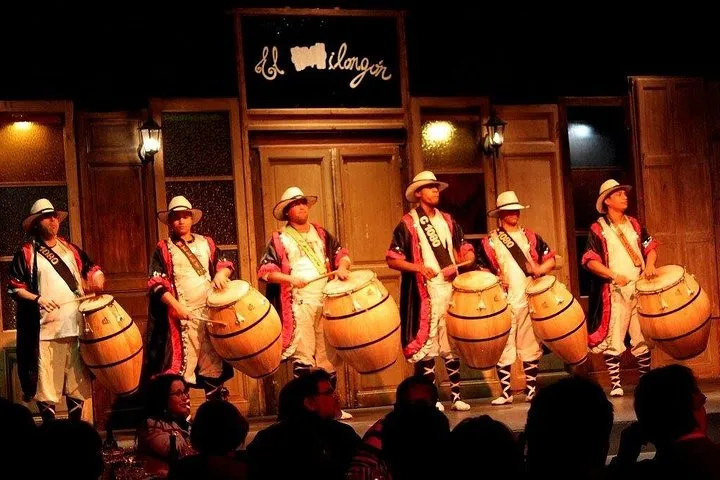 from $107
El Milongon Dinner & Show: Candombe, Tango and Folklore
An evening dinner show combining candombe, tango and folklore with a three-course meal and optional hotel transfers.
Check Availability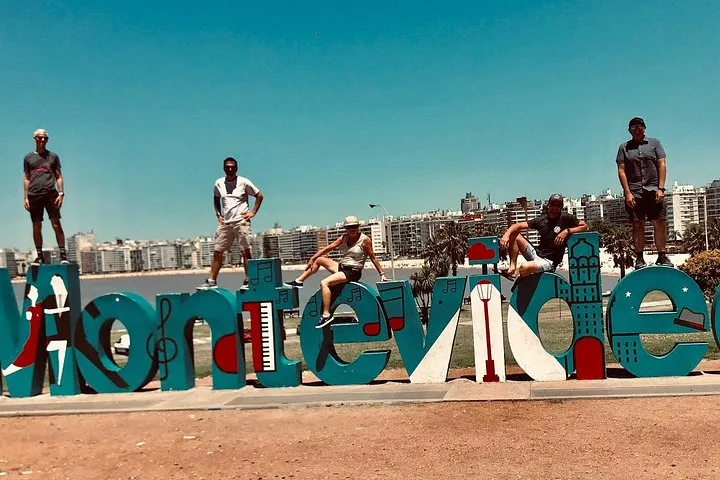 from $129
Private Walking Tour in Montevideo
A private certified-guide walking tour of the old city that starts within walking distance of the cruise port, with an optional candombe drum class.
Check Availability from $39.20
Montevideo Highlights: Shared City Tour for Cruise Passengers
A short shared city tour timed to cruise docking, wheelchair accessible and priced at $39.20 per person.
Check AvailabilityPrices, ratings and details are the platform's own. Dollar figures are the listed prices. The platform bills in your account's currency.
Teatro de Verano and the Tablados
Montevideo watches carnival in two kinds of place, the big open-air theatre that hosts the official contest and the neighbourhood stages called tablados.
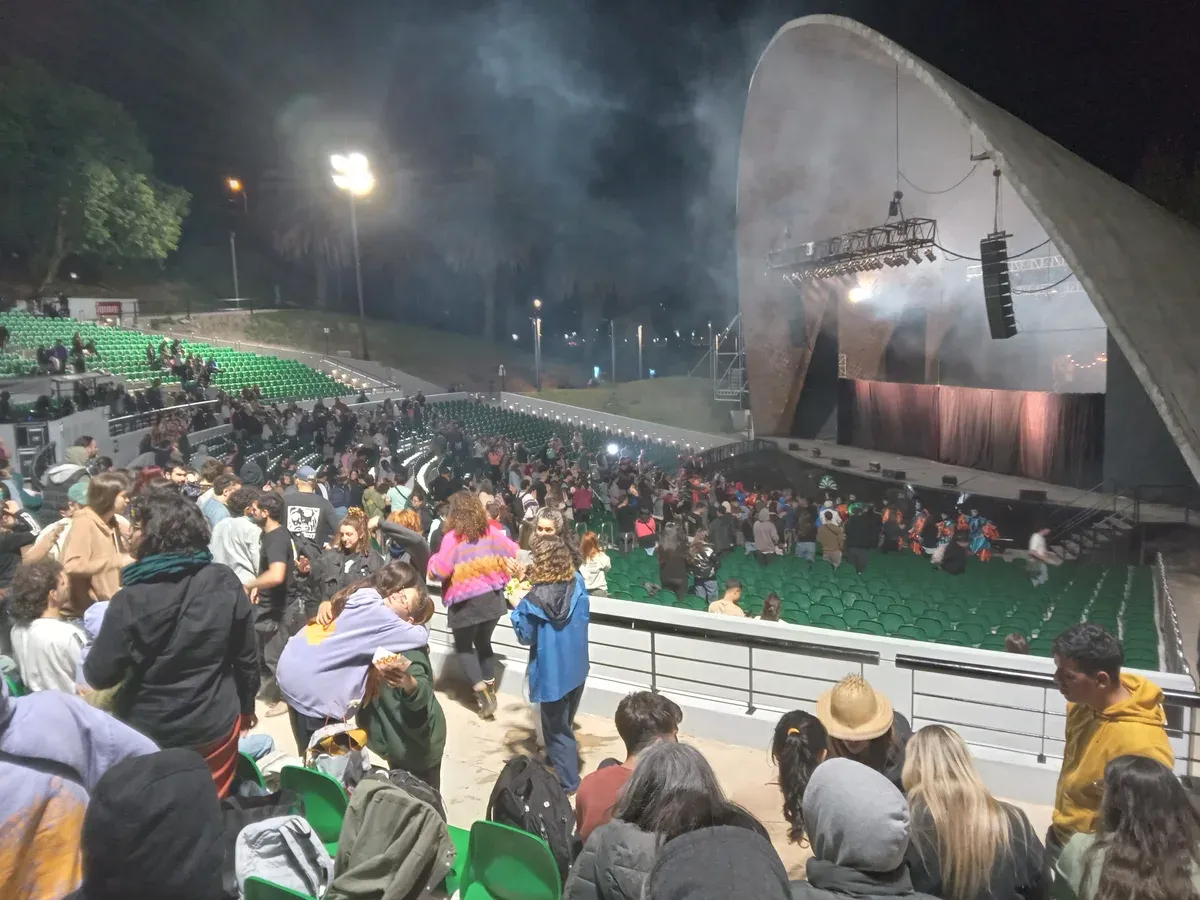
Teatro de Verano Ramón Collazo on the final night of the 27th Murga Joven, with a murga leaving the stage. Photo: Piracalamina, CC0, via Wikimedia Commons
Teatro de Verano Ramón Collazo
Teatro de Verano is an open-air amphitheatre built in the old stone quarries of Parque Rodó. It opened on 15 January 1944 with the Original Ballet Russe, took the name of the carnival figure Ramón Collazo in 1987, and gained a new vault in 2006, built in Eladio Dieste's reinforced ceramic system after the storm of 2005 damaged the previous roof. It is the main seat of the official carnival contest, which is why the theatre matters to any visitor planning a carnival night.
The stand faces the stage under the open sky, so the same rule applies as for any night out by the river: carry a layer, and check the city page if rain threatens.
Tablados, the Neighbourhood Stages
Tablados are stages set up in clubs and squares across the city, where the contest groups perform their shows outside the theatre. Groups play several tablados in a single night, moving from one stage to the next. The city also runs escenarios populares, stages at affordable prices, and mobile stages that tour the barrios, so a night of carnival can be found well beyond the centre.
Tablados during the season have appeared at the Velódromo Municipal, Club Malvín, the Rural del Prado and the Museo del Carnaval. A tablado night stacks several groups in a row, which makes it the best one-night choice for a visitor. You hear a murga, a comparsa and a parodista in the same evening, among a largely local crowd.
Source: Intendencia de Montevideo, Wikipedia.
The Five Categories on Stage
Five contest categories share the stages, and each works differently. The table compares them at a glance.
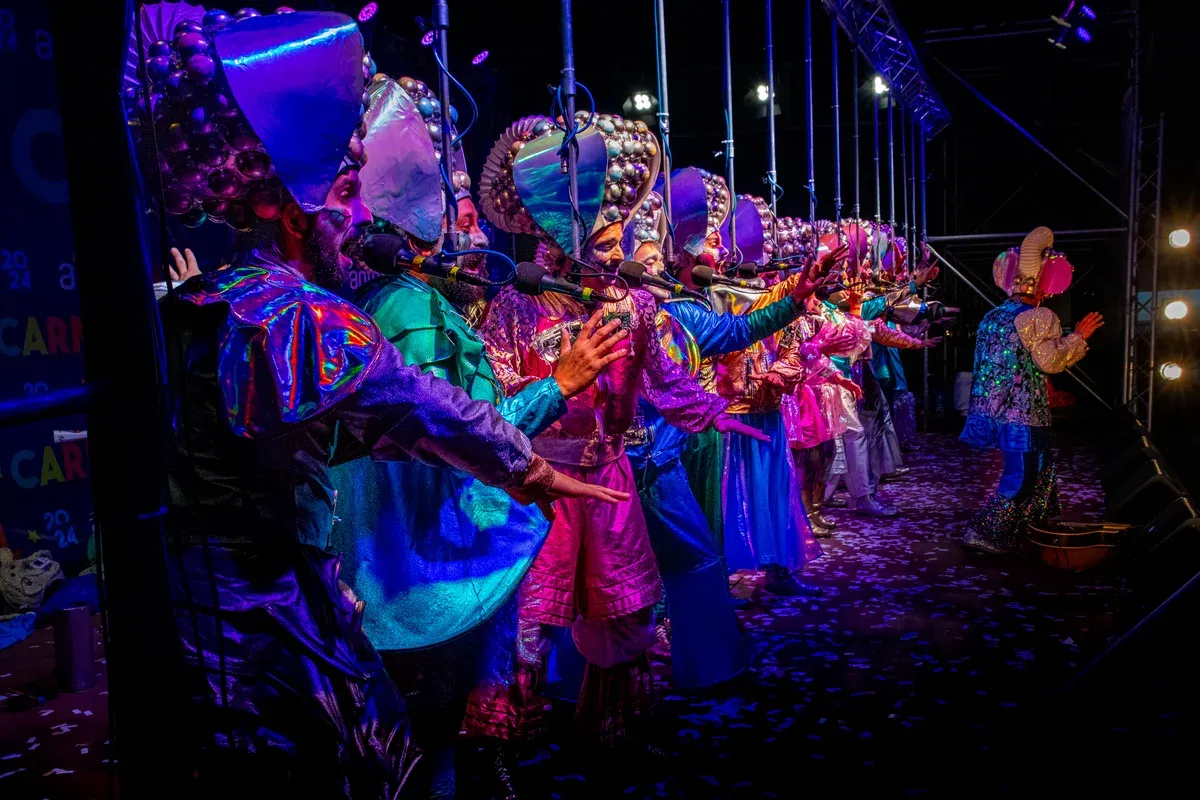
Murga Queso Magro on the tablado at the Velódromo Municipal during the 2024 carnival. Photo: Niamfrifruli, CC BY-SA 4.0, via Wikimedia Commons
Murga
A murga is a choir of 13 singers led by a stage director, backed by three percussionists on bombo, platillos and redoblante, the drum kit created by José Ministeri in 1918. The driving rhythm is called marcha camión. The show satirises politics, sport and television, and it always runs in four parts: presentación, popurrí, cuplés and despedida.
That structure is how a visitor without Spanish follows it. You know exactly where you are in the show, and the farewell song is the emotional high point even if you miss every joke. Murga was born from the 1909 visit of a zarzuela troupe from Cádiz, whose Murga La Gaditana inspired the first Uruguayan murga, 'La Gaditana que se va'.
Watch for the four parts and clap at the right moments.
Comparsas de Negros y Lubolos
These are the candombe groups, a comparsa built around a cuerda of drummers, dancers and the old carnival characters. Candombe carries the African Uruguayan tradition that shapes the whole Llamadas parade, and UNESCO inscribed it on the Intangible Cultural Heritage list in 2009. Lubolos were people of European descent who blackened their faces to join the comparsas, a practice recorded from the 1870s.
The official contest for negros y lubolos has run since 1905, making it one of the oldest parts of the carnival programme. A comparsa set is drums first: a tablado puts you a few metres from the cuerda, while the Llamadas boxes give a seat along the parade route. Our candombe page covers the rhythm and the Sunday drum calls.
Parodistas, Humoristas and Revistas
Parodistas, on stage since 1939, stage a full parody of a book, a film or a historical figure, and they are among the biggest draws of the contest. Humoristas, a category since 1946, mix song, dance and recitation in shorter, looser shows. Revistas, the oldest of the three categories at 1934, put dance first.
Knowing the difference helps you pick your night at Teatro de Verano. If you want spectacle and costumes, aim for a parodistas night. If you want movement and colour without worrying about the words, a revistas night travels best across a language barrier.
The five categories side by side, as the city and the contest rules describe them.
| Category | In the contest since | What you see |
|---|---|---|
| Comparsas de negros y lubolos | 1905 | A cuerda of candombe drums, dancers, old characters |
| Murga | 1910 prize, drum kit 1918 | A satirical choir in four parts |
| Revistas | 1934 | Dance first, song and music |
| Parodistas | 1939 | A parody of a book, film or historical figure |
| Humoristas | 1946 | Song, dance and recitation for laughs |
Source: Descubrí Montevideo, Wikipedia.
Carnival Outside January to March
The season does not switch off when March ends. Auditions, youth festivals and a year-round dinner show keep carnival music audible in Montevideo in any month.
October and November: the Auditions
Groups earn their carnival places months before the first parade. In October the Llamadas de Admisión take place in the Prado, and 23 comparsas qualified for the next Llamadas at the most recent round. In November the Prueba de Admisión brings 34 groups to Teatro de Verano over seven nights, competing for places in the official contest.
These admission nights are real carnival shows with everything at stake, played at local scale. If your trip falls in the southern spring, an audition night gives you an evening of murga and comparsas without the peak-season crowds. Check the city's carnival page for the exact nights of each round.
Murga Joven and Carnaval de las Promesas
November also belongs to the next generation. The Encuentro de Murga Joven, a festival of new and young murgas, runs at the Las Duranas cultural centre with free entry. The Carnaval de las Promesas is the equivalent stage for performers up to 18 years old.
Free entry makes Murga Joven the easiest way to hear a full murga show on a November trip, before the season has officially begun. The city announces each edition on its carnival page, which is where to find the nights.
Any Month: the Museum and the Show
If you visit outside the season, three things put carnival in front of you anyway. The Museo del Carnaval by the port explains the costumes, the drums and the categories, which makes any later show easier to read. The candombe and tango dinner show at $107 runs year-round and delivers candombe drummers, tango and folklore with a three-course dinner. The private walk of the old city at $129 per group has a candombe drum class variant open to all levels and kids. Cruise passengers can also take the shared city tour that covers candombe's roots at $39.20, a 3-4 hour loop from the port terminal.
Source: Intendencia de Montevideo.
How Montevideo's Carnival Grew
Carnival in Montevideo began in the 19th century as water fights from balconies, thrown over three holiday days, before the authorities took charge of organising the celebrations. The first official comparsa contest took place on 16 February 1874 on a stage in Plaza Matriz, with 35 comparsas taking part, 11 of them Black groups, a measure of how central the African Uruguayan community was from the start. The first comparsa, Raza Africana, appeared around 1865.
Murga arrived in 1909, inspired by a visiting troupe from Cádiz. The groups organised their own union, DAECPU, in 1952, and the first Desfile de Llamadas marched in 1956. Under the 1973-1985 dictatorship carnival became a focus of resistance despite censorship.
The national government declared carnival of National Interest in 2007. It is considered the longest carnival in the world at about forty days.
Source: Wikipedia.
Carnival in Uruguay in Nine Dates
-
1865
Raza Africana appears
The first recorded comparsa, Raza Africana, forms around this year.
-
1874
First official contest
On 16 February, 35 comparsas compete on a stage in Plaza Matriz, 11 of them Black groups.
-
1905
Negros y lubolos contest
The official contest for candombe comparsas begins.
-
1909
La Gaditana arrives
A Cádiz zarzuela troupe inspires the first Uruguayan murga, 'La Gaditana que se va'.
-
1918
The murga drum kit
José Ministeri, known as Pepino, creates the batería of bombo, platillos and redoblante.
-
1944
Teatro de Verano opens
The open-air amphitheatre in Parque Rodó opens on 15 January and later becomes the contest's main seat.
-
1952
DAECPU is founded
The carnival groups form their own union.
-
1956
First Llamadas parade
The Desfile de Llamadas marches for the first time along Isla de Flores.
-
2007
National Interest
Carnival is declared of National Interest, and UNESCO adds candombe to its heritage list in 2009.
The dates below come from the Intendencia de Montevideo, Descubrí Montevideo and Wikipedia.
Do and Don't During Carnival
Do
- Buy Teatro de Verano tickets in advance at an Abitab outlet, since leftover seats go on sale at the box office each night.
- Watch the Llamadas from a tourist box if you want toilets, security and a fixed place among the drums.
- Learn the four parts of a murga show before your first tablado so you know when the farewell song arrives.
- Check the city's carnival page on the day of a show, because rain moves nights rather than cancelling them.
- Take a jacket to Teatro de Verano, which is open air and sits by the river.
Don't
- Do not drive to the Llamadas, since Isla de Flores closes to traffic and nearby streets ban parking from 8:00.
- Do not expect a printed price for contest tickets online, ask at Abitab or the box office instead.
- Do not plan the whole trip around next year's exact parade dates, the city publishes them each season.
- Do not skip the tablados in favour of the theatre only, a neighbourhood stage is the local way to watch.
- Do not leave the Museo del Carnaval for a rainy afternoon only, it makes the first live show easier to read.
Where Carnival Happens
The two parade routes, the contest theatre and the stages a visitor can reach, on one map.
Coordinates approximate, from OpenStreetMap.
Next Reads for a Carnival Trip
Three pages that fill in the rest of a February visit.
Candombe
The drum tradition behind the Llamadas, and where the drums go out on Sundays the rest of the year.
Museo del Carnaval
Costumes, drums and the story of the categories by the port, open outside the season.
Parque Rodó
The park around Teatro de Verano, with Playa Ramírez and the lake beside the contest theatre.
Carnival in Uruguay Questions
How is carnival celebrated in Uruguay?
More on stages than in the streets. Two parades open the season, then about fifty contest groups perform their full shows at Teatro de Verano and on neighbourhood tablados through February and into March. Five categories compete, murgas, parodistas, humoristas, revistas and the candombe comparsas. Groups play several stages a night, so a visitor can hear three or four full shows in one evening.
When is carnival in Uruguay?
The season runs from late January into March, more than forty days in total. It opens with the inaugural parade on a Thursday at the end of January, the Llamadas follow over two nights in early February, and the contest runs through February into part of March. The Intendencia de Montevideo publishes each year's exact dates on its carnival page, so check there for the nights that match your trip.
Is it safe to go to Uruguay for carnival?
Carnival crowds are festive, and the parades run with streets closed to traffic, though the usual city precautions apply after dark. Read our page on safety in Montevideo before you go.
What is the most famous festival in Uruguay?
Carnival is the country's biggest festival, and it is considered the longest carnival in the world at about forty days. Within it, the Desfile de Llamadas is the single most famous event, with more than 2,500 drums parading ten blocks of Isla de Flores over two nights in early February.
How do I get carnival tickets?
The parades are free from the pavement, and paid seats and boxes are sold through the Abitab network, which has outlets across the city. Teatro de Verano contest tickets are sold at Abitab in advance, and any remainder goes on sale at the theatre box office each night. No price list is posted online, so ask at the outlet.
What is a murga?
A murga is a choir of 13 singers with a stage director and three percussionists, performing a satirical show about politics, sport and television over the year's events. Its rhythm is called marcha camión. Every show runs in four parts, presentación, popurrí, cuplés and despedida, and the murga tradition began after a 1909 visit by a zarzuela troupe from Cádiz.
What is a tablado?
A tablado is a neighbourhood stage, set up in a club or a square, where carnival groups perform their contest shows outside Teatro de Verano. Groups play several tablados a night. The city also runs escenarios populares at affordable prices and mobile stages that tour the barrios, so a tablado night is the easiest single evening of carnival for a visitor.
Is Uruguay's carnival the longest in the world?
It is considered the longest carnival in the world, at more than forty days from late January into March. The length comes from the contest format, since about fifty groups each perform many times across the theatre and the tablados rather than appearing in a single parade.
Do I need Spanish to enjoy a murga?
No, and the four-part structure is the reason. Every murga show moves through presentación, popurrí, cuplés and despedida, so you always know where the show stands. You will miss the topical jokes, but the costumed drama, the choral singing and the farewell song carry the evening. A visit to the Museo del Carnaval first makes the characters and rituals far easier to read.
Planning a Carnival Trip to Montevideo
February puts carnival and beach season on the same weeks, so book a base early from our pick of Montevideo hotels, ideally near Centro or the Rambla for late nights. Carnival overlaps with beach season, and January is the warmest month, so check the weather and leave room for the beaches between shows. The inaugural parade starts at 20:00 and the stage shows run at night, which fits the city's own nightlife rhythm.
Pay restaurant bills with a foreign card and the VAT cut, in force until 30 April 2027, takes 9 percentage points off late dinners. Keep the usual city sense after dark, and read our safety page. For the daytime hours, work from things to do in Montevideo.
Carnival in Uruguay on Film
A murga on the contest stage, the drums of the Llamadas and a Sunday llamada in Barrio Sur.
La Trasnochada - Murga, Concurso Oficial de Carnaval
A murga show from the official contest, the four-part structure in action.
Video: Eventos ROUDesfile de Llamadas (Día 1)
The first night of the Llamadas on Isla de Flores.
Video: Caídas LibresAsaltantes con Patente - Liguilla 2025 - Tercera etapa
A murga set from the contest playoff stage at Teatro de Verano.
Video: TenfieldoficialPrices, hours and terms are set by the venue or operator and confirmed at checkout.
We may earn a commission if you book through one of our links, at no extra cost to you. Full affiliate disclosure