 Montevideo City Guide
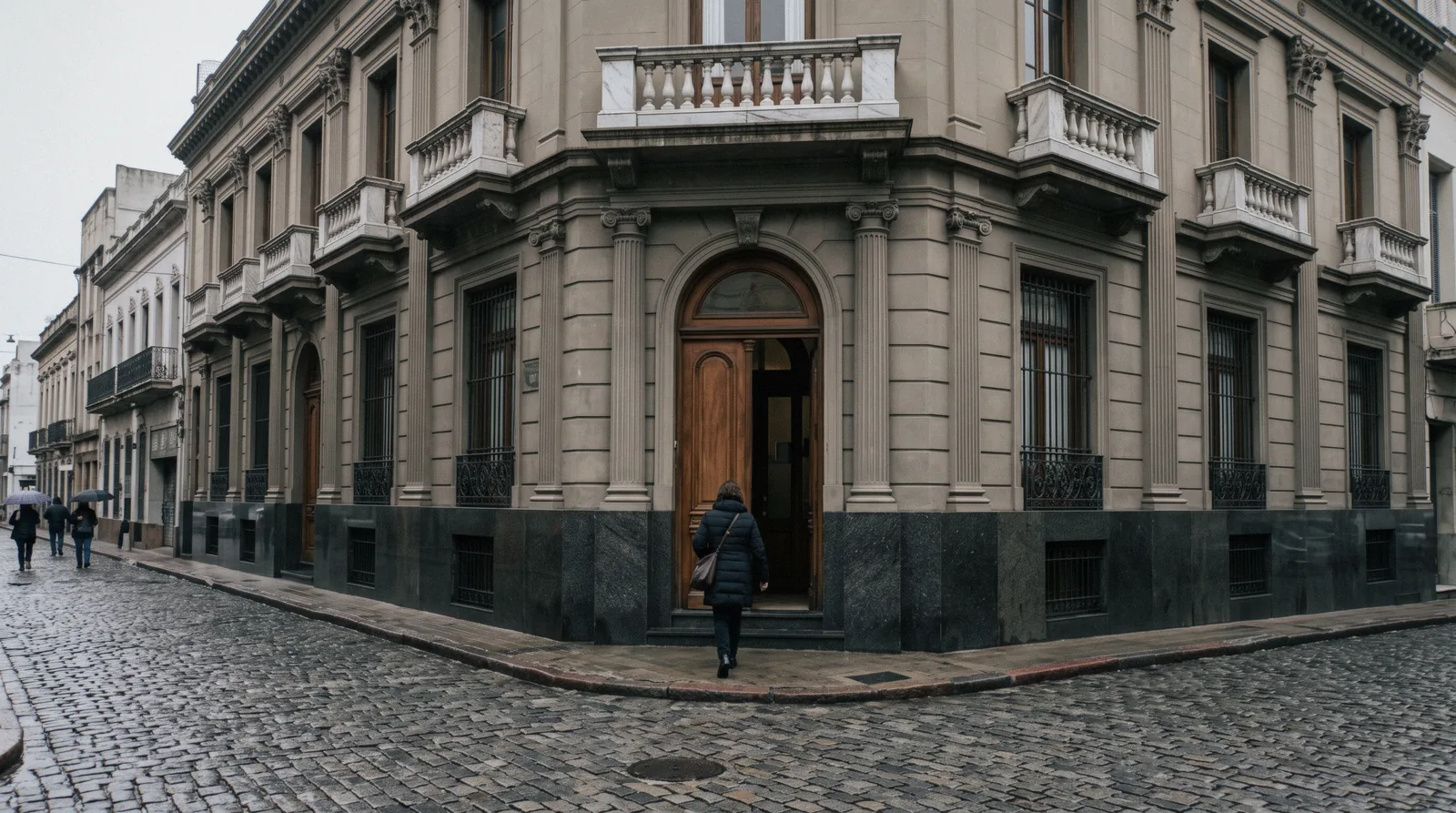
Museo Andes 1972: The Andes Crash Museum in Montevideo
The Museo Andes 1972 is the Montevideo museum of the 1972 Andes air crash and the 16 survivors who walked out after 72 days. It sits in Ciudad Vieja, the old port quarter, a short walk from Plaza Matriz. This page gives you the $8 admission ticket and the hours (closed Sundays), a look at what fills the three floors, the story of Flight 571 told plainly, and ways to fit the visit into a day of things to do in Montevideo.
Quick answer Price, hours, how long, what is inside
On 13 October 1972 a chartered flight from Montevideo to Santiago crashed in the Andes with 45 people aboard. The Museo Andes 1972 tells that story over three levels with 35 display cases of original objects and a cold simulator. It opens Monday to Friday 10:00-17:00 and Saturday 10:00-15:00, and it is closed on Sunday. Most visitors spend 60 to 90 minutes. Last entry is 30 minutes before closing.
Key takeaways
- Entry is the Museo Andes 1972 admission ticket at $8 per person, rated 4.9 from 424 reviews, with free cancellation up to 24 hours before.
- The museum is closed on Sunday, so plan a weekday or a Saturday morning in Ciudad Vieja.
- Pair it with the free Cabildo on Plaza Matriz or the Ciudad Vieja walking tour, which passes the same square.
- From the cruise terminal you can walk into the old town. See our cruise port guide for the route.
Key facts
Opening hours
| Mon-Fri | 10:00–17:00 |
|---|---|
| Sat | 10:00–15:00 |
Closed Sunday. Last entry 30 minutes before closing
Admission
- Adult
- [The admission ticket](#tour-29) $8
- Reduced
- Seniors 65 and over USD 6, youths 15 and under USD 4 (museum's own prices)
- Free
- Children under 12
Planning it
- Time needed
- 60 to 90 minutes, the museum's own estimate
- Book ahead
- Optional — walk-up usually fine
- Address
- Rincón 619 corner Juan Carlos Gómez, Ciudad Vieja, 11000 Montevideo, Uruguay
The admission ticket for the Museo Andes 1972 and the three old town walks that pair with it, priced from the operators' own listings in US dollars.
One ticket opens the museum. The only choice left is a guided walk of the old town around it.
| Option | Price | Length | What you get | Book |
|---|---|---|---|---|
| Museo Andes 1972 admission ticketEveryone who wants the museum, rated 4.9 from 424 reviews | $8 | 45-90 minutes | Entry to the three floors, free cancellation 24 hours | Check Availability |
| Ciudad Vieja walking tourVisitors who want the old town explained before or after the museum | $20 | 2.5 hours | Old town walk past Plaza Matriz, Cabildo entry included | Check Availability |
| Walking tour with a photographerTravellers who want pictures from the day | $37.99 | 105 minutes | About 40 edited photos of you in the old town | Check Availability |
| Private walking tourCruise groups who step off the ship | $129 per group | 2.5 hours | Private guide from the lamp post on Yacaré and Piedras | Check Availability |
Prices per person unless marked. Figures current {checked}.
Museo Andes 1972 Ticket and Old Town Walks
The admission ticket first, then the walks that pass the museum's corner of Ciudad Vieja. More on the Montevideo tours page.
 from $8
Museo Andes 1972 / Crash Memorial Admission Ticket
A low-cost $8 museum ticket honoring the 1972 Andes crash victims and survivors, not a guided excursion.
Check Availability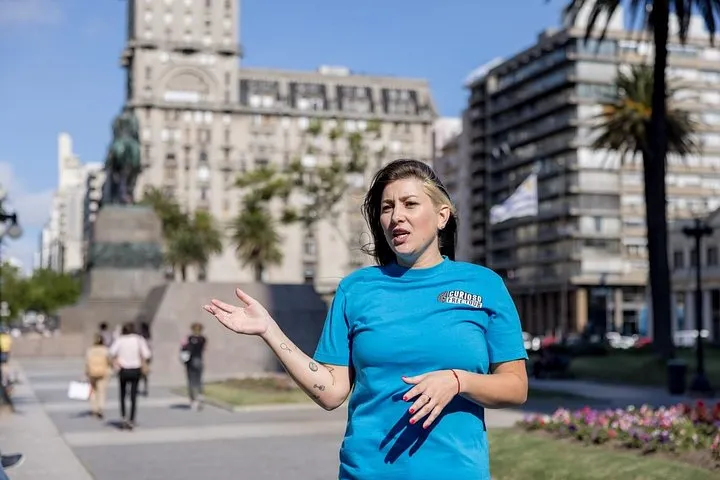 from $20
Historical and Cultural Tour of Montevideo Discover Old Town
A 2.5 hour guided walking tour of Montevideo's Old City with entry to three sights included for $20.
Check Availability from $37.99
Montevideo: Walking Tour with Photographer and Audioguide
A 105-minute Old City walk where a professional photographer takes your photos and around 40 edited images arrive by email within 7 days.
Check Availability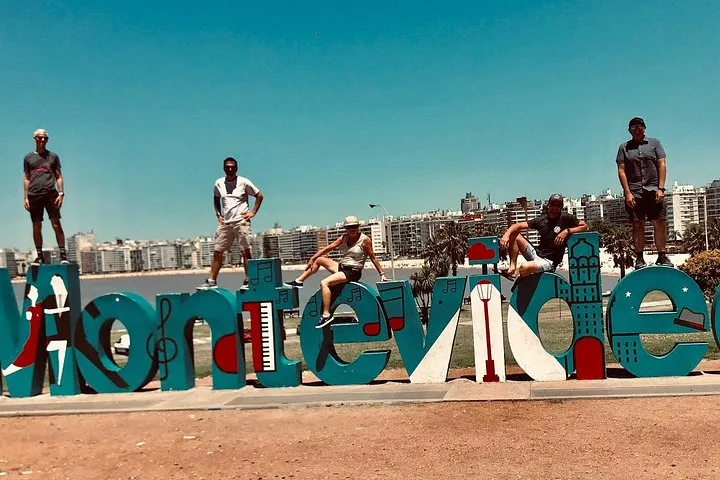 from $129
Private Walking Tour in Montevideo
A private certified-guide walking tour of the old city that starts within walking distance of the cruise port, with an optional candombe drum class.
Check AvailabilityPrices, ratings and details are the platform's own. Dollar figures are the listed prices. The platform bills in your account's currency.
What Is Inside the Museum
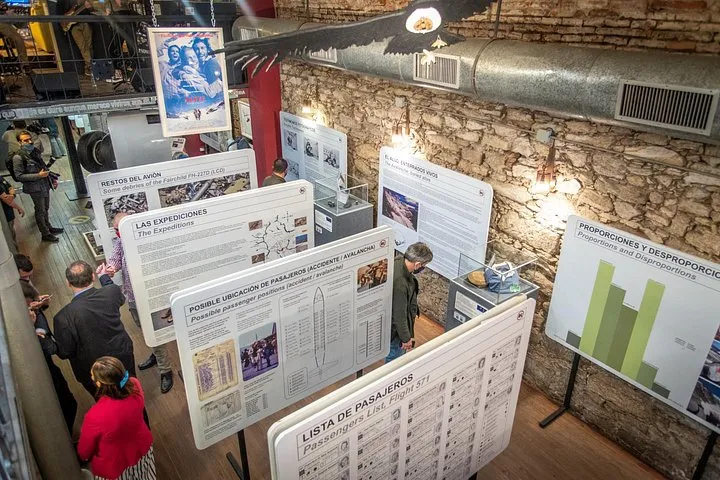
The permanent exhibition spreads over 400 square metres on three levels, with more than 45 information panels.
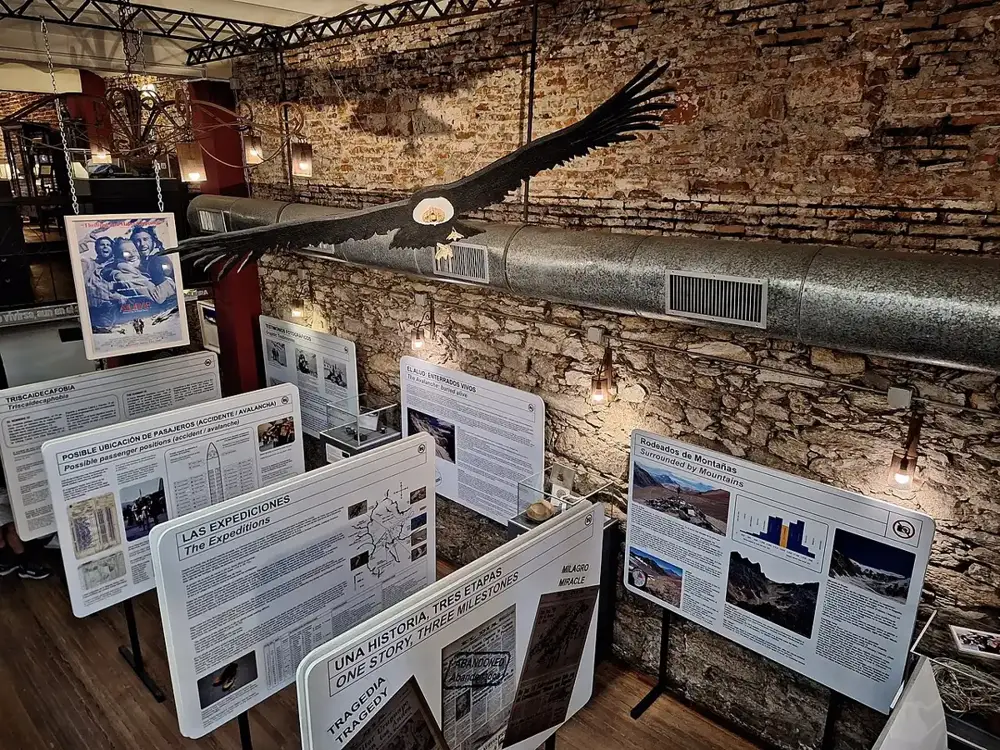
The ground floor, panels set against the old walls of the house. Photo: Lucía Gordillo, CC0, via Wikimedia Commons
Objects From the Glacier
The core of the collection comes from the Glaciar de las Lágrimas, the glacier where the wreck lay and where the survivors lived through the 72 days. The museum holds photographs, explanatory drawings, original documents, clothing and parts of the aircraft itself, gathered from the site. The Intendencia's tourism site, which describes the museum as dedicated to the 29 people who died and honouring the 16 who returned, lists these as the heart of the display.
Across the exhibition you will find 35 display cases holding original objects, supported by more than 45 information panels. The clothing and the aircraft parts came down from the mountain, and standing close to them is the main reason the museum matters to people who know the story only from films.
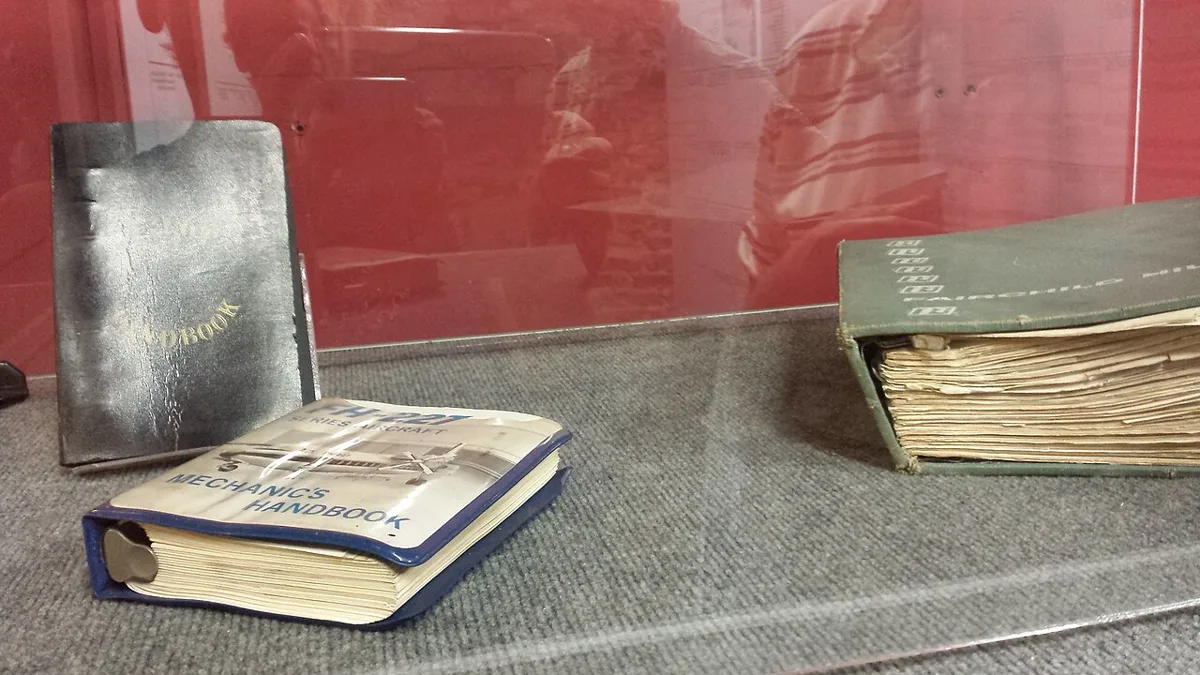
Manuals and records from the Fairchild that crashed in the Andes, in one of the display cases. Photo: Mevrob, CC BY-SA 3.0, via Wikimedia Commons
What the Survivors Made
Part of the exhibition recreates the objects the survivors built on the mountain with what the wreck gave them. Hoods and gloves were cut from seat covers to shield heads and hands from the cold. Snow-water collectors were made from seat backs to turn snow into drinking water.
The museum shows recreations of these objects. They tell you more about the 72 days than any panel, because they show the daily problem the group faced: staying warm, staying hydrated, staying a group. The museum states its aim as representing all 45 people on board and their values of solidarity, teamwork and resilience, and these handmade objects carry that better than words.
The Timeline and the Simulator
A timeline runs through the exhibition, setting the events on the mountain beside what was happening in the world during the same 72 days. It is a useful frame if you know only the rough outline of the story. The museum also runs an Andean conditions simulator, where you can feel temperatures down to -20 C and wind gusts up to 10 km/h.
It is brief, but it gives a physical sense of what the survivors endured in thin clothing at altitude. Alongside the documents there are artworks by survivors and by other artists, and unpublished audiovisuals play through the rooms. The admission ticket is rated 4.9 from 424 reviews, and the museum's own estimate for the full circuit is 60 to 90 minutes.
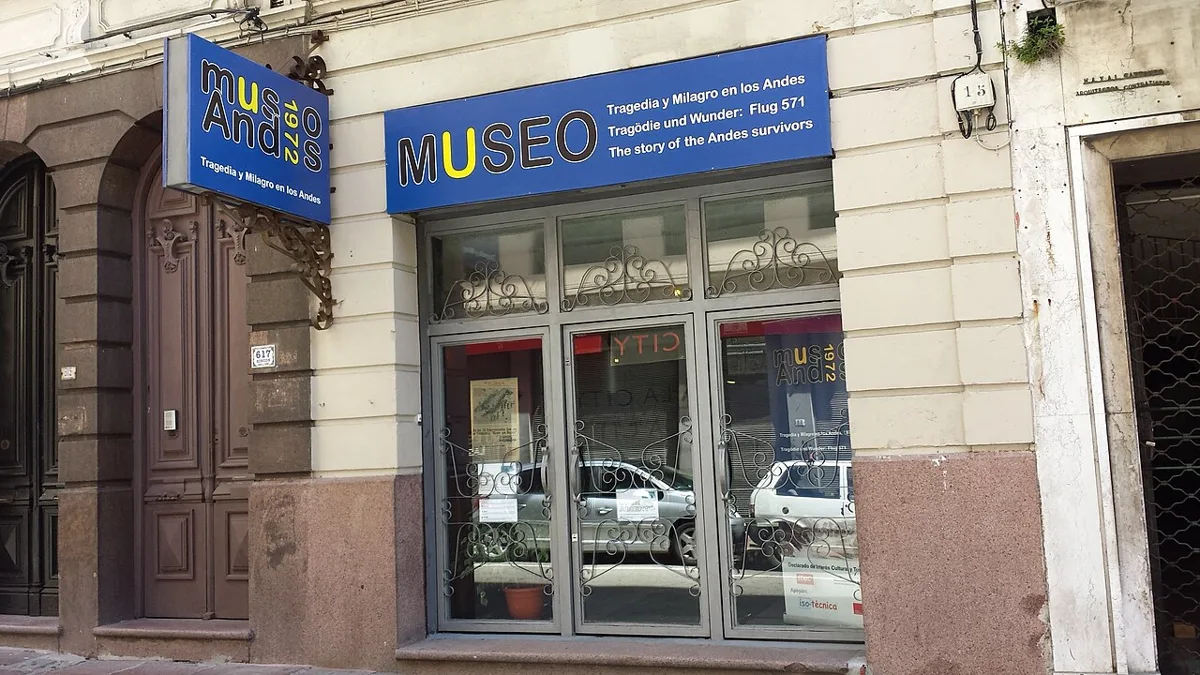
The museum front on Rincón, in the 19th-century house. Photo: Mevrob, CC BY-SA 3.0, via Wikimedia Commons
The Building Itself
The museum occupies a house from the second half of the 19th century. It has a granite base, an upper floor with Corinthian pilasters and Carrara marble balconies, cast-iron interior columns, and load-bearing walls that mix period handmade bricks with stone from the colonial wall of Montevideo, pulled down in 1829. The house was bought in 1887 by Manuel Bastos, who came from Amarante in Portugal, and it has stayed in the founder's family for seven generations.
That history ties the museum to the older city around it, since the stones in the walls once stood in the Spanish walled town. The surrounding blocks are the oldest part of Ciudad Vieja, and the walk to the door passes plazas and church fronts worth pausing at.
Source: Museo Andes 1972, el museo, Descubrí Montevideo, Museo Andes 1972.
The Story of Flight 571
The history below comes from Wikipedia and the museum's own pages.
The Crash
Uruguayan Air Force Flight 571 was a chartered Fairchild FH-227D flying from Montevideo to Santiago de Chile. It carried 45 passengers and crew, including 19 members of the Old Christians Club rugby team with family and friends. On 13 October 1972 the aircraft flew into the Andes in Argentina and crashed at 3,660 metres.
The co-pilot believed he had already passed the Chilean town of Curicó and began to descend too early, into peaks that were still ahead. The wreck lay high on a glacier, far from any road. The search was called off after eight days, on 21 October, and the outside world assumed no one could still be alive.
Among the passengers, 29 would die on the mountain and 16 would come home.
Seventy-Two Days
The survivors faced cold, altitude and almost no food. They made the decision, stated plainly by Wikipedia, to eat the flesh of those who had died so that the living could hold on. It remains the part of the story people find hardest, and the museum treats it without drama.
On 29 October an avalanche struck the wreck site and killed eight more people, burying the fuselage they were sheltering in. The museum names what carried the group through as solidarity, teamwork and resilience, and that is the thread its rooms follow through the 72 days on the mountain.
The Walk Out and the Rescue
On 12 December, more than two months after the crash, Nando Parrado, Roberto Canessa and Antonio Vizintín set out westward to find help. Vizintín turned back after three days to save food for the others. After nine days of walking, Parrado and Canessa met Sergio Catalán, a Chilean on horseback, on the far side of the mountains.
A Guardian interview cited by Wikipedia puts their trek at about 60 km over 10 days. Helicopters rescued the remaining survivors on 22 and 23 December 1972, ending the 72 days. The story reached the screen in Alive in 1993 and in Society of the Snow in 2023, the second based on Pablo Vierci's 2008 book.
Planning the Visit
The museum keeps short hours and closes on Sundays, so timing decides whether you get in at all.
Days and Hours
The museum opens Monday to Friday from 10:00 to 17:00 and on Saturday from 10:00 to 15:00. It is closed on Sunday. Last entry is 30 minutes before closing, which our sum puts at 16:30 on weekdays and 14:30 on Saturday.
The Saturday cut-off is the trap for weekend visitors: arrive after 14:30 and you are too late to go in. If your cruise calls on a Sunday, the museum will be closed and no amount of planning fixes it. A weekend call can still work on Saturday if you come in the morning.
Other old town museums share part of this pattern. The Cabildo closes on Sunday too, while the Torres García museum opens every day 10:00-18:00, so a Sunday visitor still has options in Ciudad Vieja.
| Day | Open | Last entry, our sum |
|---|---|---|
| Monday to Friday | 10:00-17:00 | 16:30 |
| Saturday | 10:00-15:00 | 14:30 |
| Sunday | Closed | None |
Tickets and Prices
Entry is the Museo Andes 1972 admission ticket at $8 per person. It covers admission only, it is not a guided excursion, and it includes free cancellation up to 24 hours ahead. The museum's own ticket page lists reduced prices: seniors 65 and over pay USD 6, youths 15 and under pay USD 4, and children under 12 enter free.
Student groups can be arranged with the museum by email. Two rules come with the ticket: children must be accompanied by an adult, and the ticket may be operated with a multilingual guide. With the entry settled, you can plan the rest of the old town day around it.
Getting There and Access
The address is Rincón 619 at the corner of Juan Carlos Gómez, in Ciudad Vieja. The ticket listing puts the door 27 metres from Plaza Constitución, the square most people call Plaza Matriz, so it is easy to find. From the cruise terminal you walk into the old town past the Mercado del Puerto.
Our cruise port page covers the route. By bus, the one-hour city ticket is $1.29 (UYU 52) with an STM card, or $1.59 (UYU 64) in cash. Accessibility is limited: the museum offers only a mobile ramp, though a wheelchair, QR codes and an audio guide are available.
Our safety page covers the precautions for the old town after dark.
Source: Museo Andes 1972, Museo Andes 1972, tickets, Intendencia de Montevideo, bus fares.
From Flight 571 to the Museum in Eight Dates
-
13 October 1972
The crash
Flight 571, a charter carrying 45 people including the Old Christians Club rugby team, crashes in the Andes in Argentina at 3,660 metres.
-
21 October 1972
The search is called off
After eight days of searching over the mountains, the search ends, and those still alive at the wreck are on their own.
-
29 October 1972
The avalanche
An avalanche strikes the wreck site and kills eight of the survivors, burying the fuselage they shelter in.
-
12 December 1972
The walk out
Parrado, Canessa and Vizintín set out west. Vizintín turns back after three days, the other two walk for nine more days until they meet help.
-
22-23 December 1972
The rescue
Helicopters lift the remaining survivors off the mountain, 72 days after the crash. Sixteen have lived.
-
1993
Alive reaches the screen
The first feature film of the story carries it to a worldwide audience.
-
11 October 2013
The museum opens
The Museo Andes 1972 opens in Ciudad Vieja, founded and directed by Jörg P. A. Thomsen after exhibitions in 2012 marking 40 years.
-
2023
Society of the Snow
The film based on Pablo Vierci's 2008 book tells the story again for a new audience.
Dates below come from Wikipedia and the museum's own site, mandes.uy.
Do and Don't at the Museo Andes 1972
Do
- Do book the admission ticket in advance so your entry is settled before you arrive.
- Do allow 60 to 90 minutes for the three levels and the audiovisual rooms.
- Do try the Andean conditions simulator, which drops to -20 C with wind gusts up to 10 km/h.
- Do keep your Saturday visit to the morning, since the museum closes at 15:00 that day.
- Do combine it with the Cabildo and the Cathedral, both on the same square.
Don't
- Don't plan the visit for a Sunday. The museum is closed all day.
- Don't arrive at 14:30 on a Saturday expecting a full visit. Last entry is at 14:30 that day.
- Don't send children in alone: under-12s enter free but must be with an adult.
- Don't assume step-free access throughout. There is only a mobile ramp, so ask at the desk if you need it.
- Don't rush the panels. More than 45 of them carry the detail, and skimming them loses most of the story.
Museo Andes 1972 on the Map
The museum a few steps from Plaza Matriz, with the Cabildo, the Cathedral and the market lunch nearby.
Coordinates from Wikidata and OpenStreetMap.
Next Stops From the Museo Andes 1972
Three pages for the rest of the old town day.
Ciudad Vieja
The old town walk and the museum days, with Sunday as the closed day.
Plaza Independencia
The Artigas mausoleum and Palacio Salvo at the other end of Sarandí.
Museo Andes 1972 Questions
What caused the 1972 plane crash in the Andes?
Uruguayan Air Force Flight 571, a chartered Fairchild FH-227D flying from Montevideo to Santiago, flew into the Andes in Argentina on 13 October 1972. The co-pilot believed the aircraft had already passed the Chilean town of Curicó and began descending too early, into mountains that were still ahead. The wreck came to rest at 3,660 metres.
How far did the survivors walk?
Nando Parrado and Roberto Canessa walked about 60 km over 10 days, according to a Guardian interview cited by Wikipedia, until they met Sergio Catalán, a Chilean man on horseback. They set out on 12 December with Antonio Vizintín, who turned back after three days so the food would last the other two.
What happened to the survivors?
Sixteen of the 45 people aboard survived the 72 days on the mountain. Helicopters rescued them on 22 and 23 December 1972 after the walk-out raised help. The museum is dedicated to the 29 who died and honours the 16 who returned, and it aims to represent all 45 people on board and the values that carried the group through.
What are the museum's hours and ticket price?
The museum opens Monday to Friday 10:00-17:00 and Saturday 10:00-15:00. Last entry is 30 minutes before closing. The admission ticket is $8 per person, with reductions on the museum's own page: USD 6 for seniors 65 and over, USD 4 for youths 15 and under, and free for children under 12.
Is the Museo Andes 1972 open on Sunday?
No. The museum lists no Sunday hours and is closed that day. The Cabildo on Plaza Matriz closes on Sunday too, though the Torres García museum nearby opens every day 10:00-18:00, so a Sunday in the old town still has options if the Andes museum cannot fit your schedule.
How long does a visit take?
Plan on 60 to 90 minutes, the museum's own estimate for its 400 square metres on three levels. The ticket listing gives a range of 45 to 90 minutes. The exhibition holds more than 45 panels, 35 display cases, audiovisuals and a timeline, so readers who go slowly should keep to the longer figure when planning the rest of the day.
Is it suitable for children?
Children under 12 enter free, and children 15 and under pay USD 4, so families are welcome. Two practical points: children must be accompanied by an adult, and the subject is heavy, since 29 people died and the exhibition includes aircraft parts and documents from the disaster. Parents of younger children should decide based on what their children already know about the story.
Where the Museum Fits in a Day
Put the museum early. It opens at 10:00 on weekdays, and a morning visit leaves the whole old town ahead of you. From the door, Plaza Matriz is 27 metres away, so the free Cabildo museum across the square is the natural next stop, open Monday to Friday 11:00-17:45 and Saturday 11:00-17:00.
Walk down to the Mercado del Puerto for a grilled lunch, where paying by foreign card cuts 9 percentage points off VAT until 30 April 2027. The rest of Ciudad Vieja fills the afternoon along Sarandí and down to Plaza Independencia. If you want structure, the Ciudad Vieja walking tour runs Monday to Saturday at 10:30 and 14:30 for $20 and passes the Cabildo, or browse the other Montevideo tours and things to do in Montevideo to build the day your way.
The Museo Andes 1972 on Film
Three visits inside the museum, including its own presentation.
Museo Andes 1972, Presentación
The museum's own presentation film.
Video: Museo Andes 1972Andes Museum 1972, Rugby Players, Uruguay Flight 571, Montevideo
A visitor's walk through the rooms, in English.
Video: Travel and Traverse by Binu VVMuseu Andes 1972, Montevidéu, Uruguai
A tour of the exhibition, in Portuguese.
Video: Uruguai para brasileirosPrices, hours and terms are set by the venue or operator and confirmed at checkout.
We may earn a commission if you book through one of our links, at no extra cost to you. Full affiliate disclosure