 Montevideo City Guide
Uruguay Currency: Pesos, Dollars and the Card Rules That Save Money
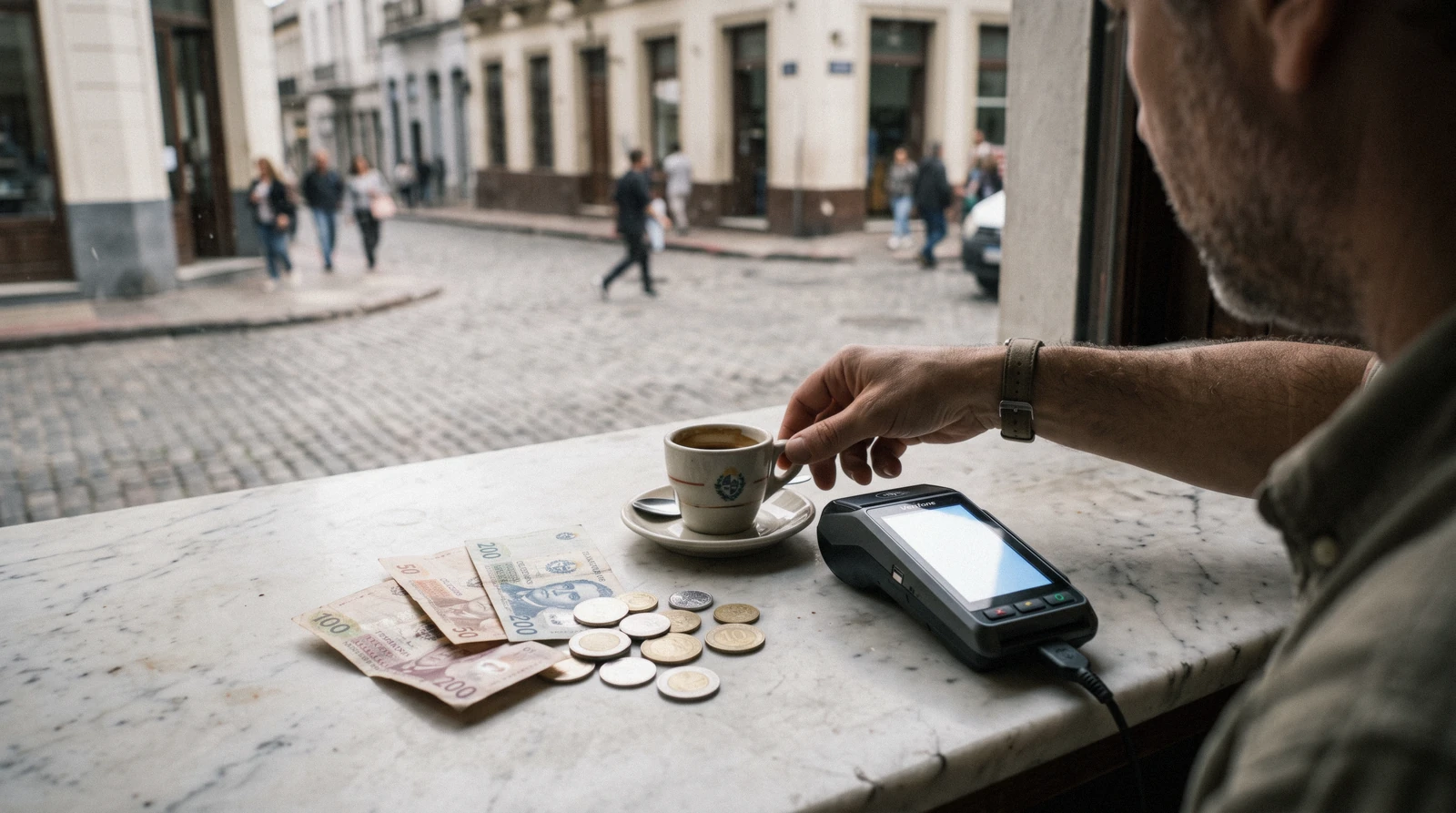
The Uruguay currency is the Uruguayan peso, coded UYU, and it is the money you will hold in Montevideo. This page explains which notes to carry, when US dollars work, and where paying by card cuts the bill. It also covers the VAT reduction for card payments, the hotel VAT exemption, the Montevideo tourist tax, ATMs and tipping, so you can plan what to spend on things to do in Montevideo.
Quick answer Pesos or dollars, the card discount, the tourist tax, ATMs
Uruguay's currency is the peso (UYU), and UYU 1,000 is $24.81 on the reference rate. Pay restaurants, car rental and winery visits by card to shave 9 VAT points off the bill, hotels charge non-residents 0% VAT with a foreign passport, the Montevideo tourist tax is USD 1 a night capped at USD 5 per person, and city buses want pesos in cash or the STM card.
Key takeaways
- Paying by card or e-money takes 9 percentage points off VAT at restaurants in Montevideo, bars, cafes, renting a car, winery tastings and event services until 30 April 2027 under Decreto 235/026. The cut appears on the bill when you pay, and small businesses under a simplified scheme give 7.38% off instead.
- Hotels charge non-residents 0% VAT on the room all year, so show a foreign passport at check-in and nothing is added or refunded. The Montevideo tourist tax is separate: USD 1 per night per person over 11, capped at USD 5 per person per stay. Book Montevideo hotels knowing both lines will show.
- The paying-the-tax slip also unlocks discounts: 5% off Bus Turístico tickets bought on the bus, 10% off Comedia Nacional shows and 50% off guided Teatro Solis tours. Buses themselves cost $1.29 (UYU 52) by STM card against $1.59 (UYU 64) cash, so the card saves money on every ride. Browse Montevideo tours for guided options.
- Use ATMs inside banks or shopping centres, because banks open only 13:00-17:00 and street machines carry more risk. Carry some pesos for buses and markets, a card for meals, and dollars for dollar-quoted prices. Read is Montevideo safe before you carry cash around the city.
Uruguayan Peso at a Glance
Montevideo prices most daily spending in pesos. The conversions below use the daily reference rate of UYU 1,000 = $24.81. Four everyday prices to calibrate by.
UYU 52
one-hour city bus ticket with an STM card
- USD$1.29
- EUR€1.15
- GBP£0.96
UYU 64
one-hour city bus ticket paid in cash
- USD$1.59
- EUR€1.42
- GBP£1.19
UYU 100
minimum STM card top-up
- USD$2.48
- EUR€2.22
- GBP£1.85
UYU 2,000
the 2,000-peso note, the largest in circulation
- USD$49.62
- EUR€44.38
- GBP£37.04
Exchange rates move daily. Treat the dollar figures as a reading of the day, not a promise. Source: Exchange Rate API (open.er-api.com) daily reference rates.
The Uruguayan Peso: Name, Code and Symbol
Prices on the street are written in pesos unless they say otherwise, and the sign used for them is easy to misread.
Name, Code and the Dollar Sign
In Spanish the currency is called the peso uruguayo. Its ISO code is UYU. The symbol printed on price tags and on official fare tables is $, the same sign as the US dollar.
The city government prints the one-hour bus ticket as $52, and that means 52 pesos, about $1.29. So a "$" in a shop means pesos unless it says US$ or U$S next to it. Many prices aimed at travellers are quoted in US dollars with US$ or U$S in front: the Montevideo tourist tax is written U$S 1 in the tax code.
If a bill shows both currencies, the peso figure is the one to check against the card charge.
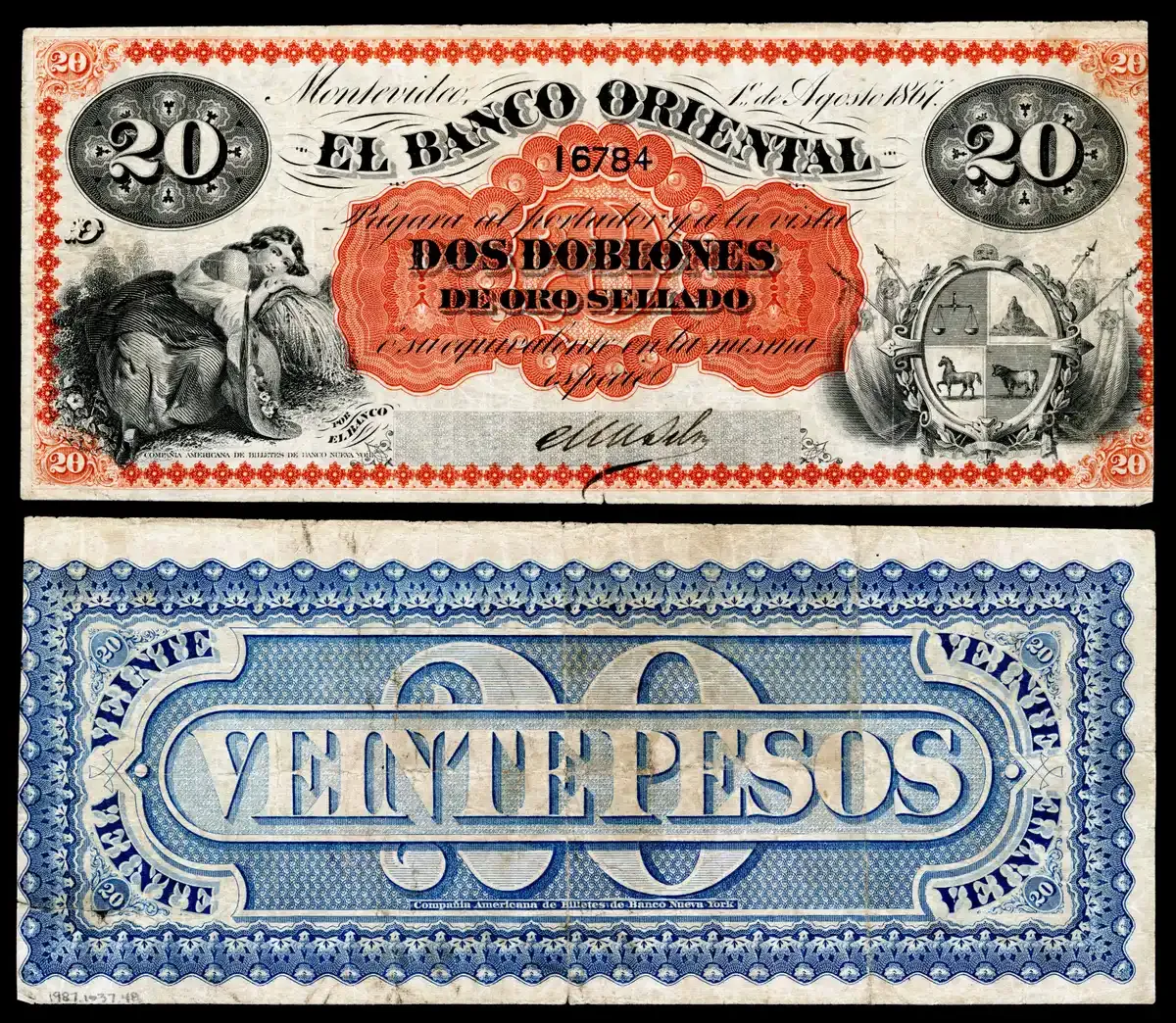
A 20-peso note of the Banco Oriental, dated 1 August 1867, from the days of private bank notes. Photo: National Museum of American History, Public domain, via Wikimedia Commons
Banknotes You Will Handle
The Banco Central del Uruguay lists circulating notes of 20, 50, 100, 200, 500, 1,000 and 2,000 pesos in two series: Serie A from 2003 and a series from 2015. Each pair of notes shares the same security features with a different watermark, so hold a note to the light to confirm it is real. The 2,000-peso note is worth $49.62, and the 1,000-peso note $24.81.
Break big notes when you can, because buses and market stalls want small ones. Ask for 200s and 500s at the exchange desk, or pay for something small at a shop to get change before you head to Mercado del Puerto or the Tristan Narvaja and the Sunday fair on the shopping page.
How Much Is $100 in Pesos
$100 = UYU 4,031 at the reference rate of UYU 1,000 = $24.81, by our conversion at the same rate. Exchange desks and card networks apply their own rate and their margin, so expect a little fewer pesos in practice. Four useful marks: UYU 100 = $2.48, UYU 500 = $12.41, UYU 1,000 = $24.81 and UYU 2,000 = $49.62.
Learn those four and you can price anything quickly: a bus fare, a museum ticket, a meal or a night out.
Source: Banco Central del Uruguay, Intendencia de Montevideo bus fares.
Pesos, Dollars or Card: What to Use Where
The rule of thumb is simple. Use a card where the VAT cut applies, use pesos for buses and small stalls, and use US dollars only where a price is quoted in dollars.
Can You Pay in US Dollars
Dollars have a place in a visit, because several prices are set in US dollars. Many hotel rates are quoted that way, the tourist tax is USD 1 per night, the Carrasco airport shuttle is USD 13 one way, and most tours sold online are priced in dollars. That does not mean every shop in Montevideo takes dollar bills.
Paying a peso price in cash dollars means the seller sets the exchange rate, which is rarely the reference rate, so you lose on the conversion without knowing it. City buses take only pesos in cash or the STM card, and a market stall needs small peso notes for change. The practical mix is to carry some pesos for the small stuff, put meals and wine on a card, and keep dollars for the dollar-quoted items like the shuttle into town.
Where Cards Win
A card does more than save you counting notes. Card or e-money payment triggers the VAT cut at restaurants, bars, cafes, car rental desks, winery tastings and event services, which is a real discount on the bill. The limits show outside the capital: the FCDO warns that cards are not always accepted outside major towns and that ATMs may reject some foreign debit cards.
On day trips from Montevideo to wineries, beaches or border towns, carry enough cash to cover fuel, food and tickets until you are back where card machines are common. Check with your bank before travel that your card works in Uruguay, and carry a second card if you have one.
What to Use Where at a Glance
The table sums up which way to pay by type of spending, from the VAT decrees, the Intendencia's bus fares and the airport shuttle price list.
| Spending | Best payment | Why |
|---|---|---|
| Restaurants, bars, cafes | Card or e-money | 9 VAT points off the bill until 30 April 2027 (Decreto 235/026) |
| Car rental and winery tastings | Card or e-money | Same 9-point VAT cut, taken off at payment |
| Hotel room | Any, with a foreign ID | 0% VAT for non-residents, invoiced without VAT |
| City buses | STM card, or pesos in cash | Card fare $1.29 (UYU 52) vs $1.59 (UYU 64) cash |
| Markets and small stalls | Pesos in cash | Small notes make change easy |
| Airport shuttle, tourist tax | US dollars | Prices officially quoted in dollars |
Source: Decreto 235/026, AeroShop Carrasco, GOV.UK.
The Card Discount: 9 VAT Points Off for Visitors
This is the money rule most visitors miss. Paying electronically cuts the VAT rate on a whole list of tourist services, and the discount is applied before you sign.
What the Decree Covers
Decreto 537/005 lists what counts. It covers restaurant, bar, cafe and similar food services, including hotel food services that are not part of the room rate. It covers guided visits and wine and local product tastings at wine-tourism establishments registered with the Ministry of Tourism.
It also covers catering for parties and events, party and event services, car rental without a driver, and intermediation in tourist property rentals. To qualify you must be a final consumer paying by credit card, debit card or electronic money, and the payment cannot be processed manually. The discount is taken off the bill at payment, so you see it before you tip.
Decreto 235/026 extends this 9-point reduction to 30 April 2027. It applies to tastings at places like the Bodega Santa Rosa tour and tasting and to anyone exploring Uruguay wine country.
How to Make Sure You Get It
Pay by card at the till rather than handing over cash, and check that the cut appears on the printed bill before you add a tip. If a small business operates under the IVA Minimo simplified scheme, it gives a 7.38% discount on the total instead of the 9-point cut, so either way the bill should come down. Your bank may charge its own foreign transaction fee on card payments abroad, which partly offsets the saving, so compare it against the desk rate for cash.
Uruguay Natural notes that the reduction also applies to electronic transfers from abroad made through a local acquirer, which matters for prepaid bookings from home.
Hotels: No VAT With a Foreign ID
Accommodation has its own, even better rule. Non-residents who show a foreign-issued ID pay 0% VAT on the room, all year. The stay is invoiced without VAT, which means there is no refund to claim and no paperwork to keep.
Show your passport at check-in and confirm the invoice carries no VAT line before you pay. The exemption applies to the room, not to meals or extras charged to it, so food ordered at the hotel follows the restaurant rules above. When you compare Montevideo hotels, look at the rate a foreign passport actually triggers rather than the local rate.
The Summer Exemption and Tax Free Shopping
Separately from the card rule, the Tourism Ministry announces each summer a fuller VAT exemption for non-resident tourists. Its terms are set each season, so check the current season on Uruguay Natural before you travel. Tax Free shopping works independently all year at participating shops: the shop does the paperwork at purchase, and you claim the refund at marked booths when leaving through listed exits.
Those exits include Carrasco airport, the ports of Montevideo and Colonia, the Punta del Este cruise terminal and the border bridges. Keep the forms with your receipts in hand luggage and allow time for the booth at Carrasco airport. Where to shop is covered on Montevideo shopping.
Source: Decreto 537/005, Decreto 235/026, Uruguay Natural.
Tours You Can Pay by Card Before You Land
These cards are priced in US dollars and paid online, so no pesos change hands. The half-day city tour and the hop-on hop-off pass both cost $25, the Bodega Santa Rosa tasting $25.70 and the Museo Andes 1972 ticket $8. More options sit on Montevideo tours. Figures current {checked}.
 from $25
Half-day Regular City Tour at Montevideo
A short, affordable group city tour of Montevideo with pickup included and cruise passengers welcome, plus a private upgrade option.
Check Availability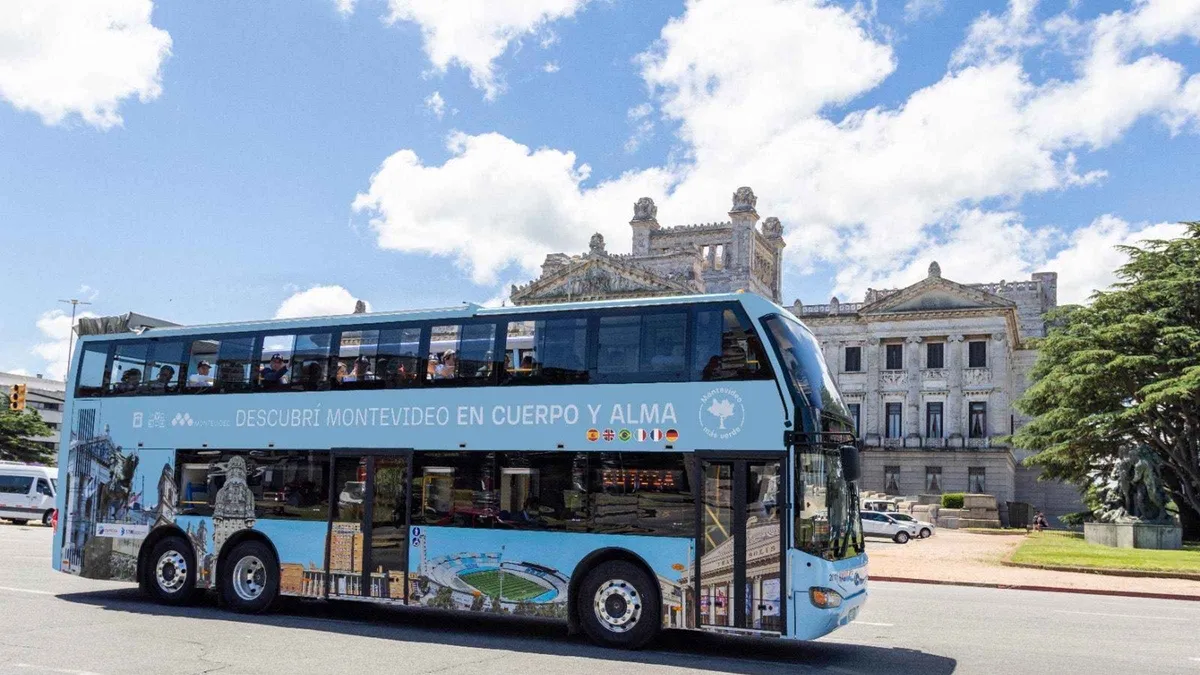 from $25
Montevideo: Sightseeing Hop-On Hop-Off Bus Tour
The cheapest city overview in Montevideo, a two-circuit 24-hour hop-on hop-off pass with audio guide for $25.
Check Availability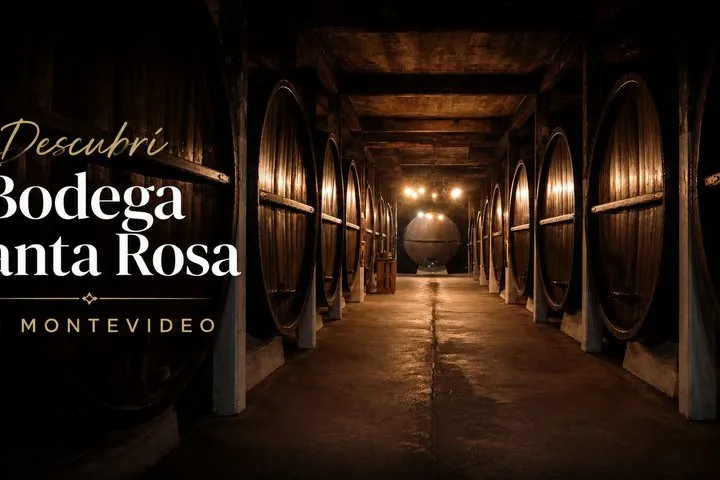 from $25.70
Montevideo Bodega Santa Rosa : tour - Tasting - Lunch
A 2-3 hour winery tour with 4-wine tasting and a cold-cuts table from $25.70, wheelchair accessible, near Montevideo.
Check Availability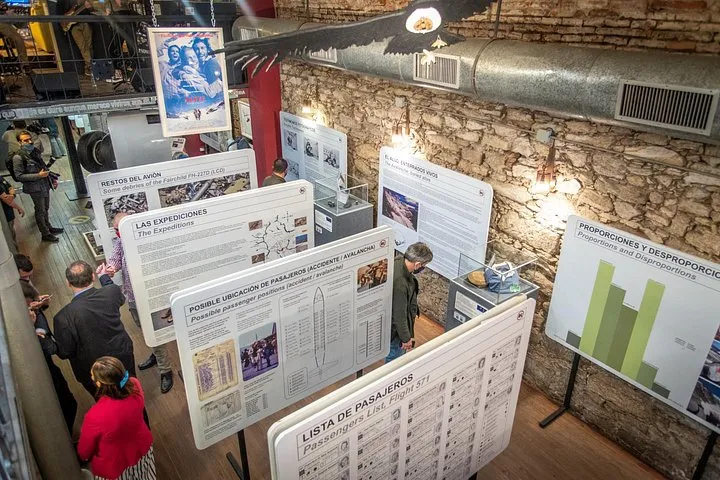 from $8
Museo Andes 1972 / Crash Memorial Admission Ticket
A low-cost $8 museum ticket honoring the 1972 Andes crash victims and survivors, not a guided excursion.
Check AvailabilityPrices, ratings and details are the platform's own. Dollar figures are the listed prices. The platform bills in your account's currency.
Montevideo Tourist Tax: USD 1 a Night
Montevideo charges its own small tax on overnight stays. It is a few dollars per trip and it comes with perks.
Who Pays and How Much
Since 1 October 2025, under Junta Departamental decree 38989, the tax is USD 1 per night in hotels and tourist-use properties, counted per night and per person over 11 years old, with a maximum of USD 5 per person per stay. Only non-residents pay, and non-resident means anyone who registers at the lodging with a foreign identity document, whatever the payment method. The hotel or rental owner must charge it at check-in or at payment as its own line on the invoice, and the tax itself carries no other levy.
Our sums make it easy to predict: a couple staying three nights pays USD 6, and a family of two adults with a 12-year-old staying a week pays USD 15, which is USD 5 each. A child of 11 or under pays nothing. Source: Montevideo Intendencia normativa page.
What the Tax Buys You Back
The money goes to a Tourism Sustainability Fund, and paying it activates benefits. You get a 5% discount on Bus Turístico tickets bought on the bus itself, 10% off Comedia Nacional shows at Teatro Solis and Sala Verdi, and 50% off guided tours of Teatro Solis. Ask the hotel reception for the voucher when you check in, because the discounts run off it.
The 5% applies at the bus door, so it does not stack on a pass booked online such as the hop-on hop-off pass. If you have evenings free, the Comedia Nacional discount makes Teatro Solis a cheap night out.
Source: Intendencia de Montevideo tax code, Descubrí Montevideo.
Cash, ATMs and Changing Money
You will still need cash in Montevideo, mainly for buses, markets and small cafes, so plan where you take it out.
Using ATMs Safely
Both the UK and Canadian travel advice point the same way: use ATMs located inside banks, businesses or shopping centres rather than standalone machines on the street. The US State Department adds a note to be vigilant at banks and ATMs outside daylight hours and in remote places, and reminds travellers not to resist a robbery and to call 911. Practical routine: take out what you need in the morning or early afternoon, inside a mall or bank branch, and carry only the day's amount.
Bank branches open 13:00-17:00 and shopping malls 10:00-22:00 every day, so a mall machine covers the morning. Read is Montevideo safe for the wider picture before you carry cash around the city.
Changing Money and Sending It
Money transfers run through Western Union, Abitab, Red Pagos and Correo Uruguayo, which gives you options if a card fails mid-trip. Change only what you need in cash, because leftover pesos convert back at the desk's margin and coins are useless abroad. Banks open in the afternoon, 13:00-17:00, so morning errands belong in shopping malls, which open 10:00-22:00 every day.
Compare two or three exchange rates before changing a large amount.
Source: GOV.UK, Travel.gc.ca, Descubrí Montevideo.
Buses, Parking and Tips: Paying the Small Things
The small payments are where the peso-dollar confusion bites, so here are the exact figures.
City Bus Fares
Since 5 January the one-hour ticket is $1.29 (UYU 52) with an STM card and $1.59 (UYU 64) in cash, so the cash payer pays about 23% more. The two-hour ticket is $1.94 (UYU 78) by card and $2.41 (UYU 97) in cash. The first common STM card is free and the minimum top-up is $2.48 (UYU 100), so getting one pays for itself within a couple of rides if you plan to use buses at all.
On CUTCSA buses the cash ticket is the common fare of $1.59 (UYU 64), which an STM card cannot buy. If buses feel like too much admin, Montevideo tours offer guided alternatives where transport is included.
Parking and Tipping
The city government's paid street parking costs $1.29 (UYU 52) an hour, the same figure as a bus ride. Tipping is not compulsory in Uruguay, but 10% is usual and well regarded in restaurants, so leave it in cash or add it when the bill is brought. Paid parking is charged by the hour, so a long lunch in the centre adds up: our sum for three hours is $3.87 (UYU 156).
If you drive, the car rental page covers tolls and the card VAT cut on the rental itself.
Bus Fare Table: Card Against Cash
The table sets the card and cash prices of a city bus ticket side by side, from the Intendencia's fare table for urban lines.
| Item | Card or STM | Cash |
|---|---|---|
| Bus, 1-hour ticket | $1.29 (UYU 52) | $1.59 (UYU 64) |
| Bus, 2-hour ticket | $1.94 (UYU 78) | $2.41 (UYU 97) |
Source: Intendencia de Montevideo bus fares, CUTCSA, Intendencia parking.
Is Uruguay Cheap for Americans
Judge it by what you actually pay for, item by item.
What Your Money Buys
Judge it from the figures rather than the label. A bus ride costs $1.29 (UYU 52) by card. The Museo Andes 1972 ticket is $8.
A half-day city tour is $25, and the hop-on hop-off pass is $25 for a full day of riding. The tourist tax is capped at USD 5 per person per stay. Hotel VAT is 0% for visitors with a foreign ID, and 9 points come off restaurant VAT when you pay by card.
The exchange margin at desks takes a little off every cash purchase, which is one more reason to pay meals by card. For a fuller picture, compare Montevideo cost of living and Montevideo vs Buenos Aires, then pick your Montevideo attractions around what your budget actually allows.
Plan the Rest of the Money Side
Montevideo cost of living
What a traveller's day costs in Montevideo, from buses to museums, with the same dollar-first conversions.
Carrasco International Airport
The shuttle priced in US dollars, the taxi zones and the Tax Free booth on the way out.
Renting a car in Montevideo
Where the 9-point VAT cut on car rental applies and how tolls are billed to a rental.
Uruguay Currency Questions
How much is $100 US in Uruguay?
$100 = UYU 4,031 at the reference rate of UYU 1,000 = $24.81, by our conversion at the same rate. Exchange desks and card networks apply their own margin, so you will usually receive a little less than the pure rate. For quick maths, remember UYU 500 = $12.41 and UYU 2,000 = $49.62.
What is the best currency to use in Uruguay?
Pesos for buses, markets and small stalls, and a card for restaurants, car rental and winery visits, where payment by card takes 9 VAT points off until 30 April 2027 under Decreto 235/026. Keep some US dollars for prices officially quoted in dollars, such as the airport shuttle at USD 13 and the Montevideo tourist tax.
Can I use American dollars in Uruguay?
Yes, where a price is set in US dollars: hotel rates, the tourist tax, the airport shuttle and most tours sold online. Do not assume every shop takes dollar bills, and avoid paying a peso price in cash dollars, because the seller sets the exchange rate. City buses take only pesos in cash or the STM card.
Is Uruguay cheap for Americans?
It depends what you buy. A bus ride is $1.29 (UYU 52), the Museo Andes 1972 ticket is $8 and a half-day city tour $25, hotels drop VAT to 0% for visitors and card payments cut restaurant VAT. Compare Montevideo cost of living before deciding.
What is the Uruguay currency symbol?
The symbol is $, the same sign as the US dollar. On price tags and official fare tables it means Uruguayan pesos unless the price carries US$ or U$S in front of it. The city government prints the bus fare as $52, meaning 52 pesos, about $1.29. When a bill shows both, the peso figure is what your card charge follows.
What is Uruguay's currency called in Spanish?
In Spanish it is the peso uruguayo, and locals usually just say pesos. The ISO code is UYU. An ATM is a cajero automático, and a peso price tag shows the plain $ sign.
Do I need cash in Montevideo?
Yes, some. City buses accept only pesos in cash or the STM card, market stalls need small notes, and a cash tip is simple. Cards work widely in restaurants, shops and hotels, and they earn the VAT cut. Use ATMs inside banks or shopping centres, because banks open 13:00-17:00 and street machines carry more risk.
Is there a tourist tax in Montevideo?
Yes. Since 1 October 2025 hotels charge USD 1 per night per person over 11, capped at USD 5 per person per stay, to non-residents who register with a foreign document. It appears as its own line on the invoice and unlocks discounts, including 50% off guided tours of Teatro Solis. Ask reception for the voucher.
Uruguay Currency on Film
Uruguay's Colorful Banknotes: Design, History & Security of the Peso Series (UYU/UI)
The peso notes up close, with the security features the central bank describes.
Video: ColorfulbanknotesUruguayan Banknotes - This is the money that circulates in Uruguay
Every circulating note from 20 to 2,000 pesos, so you know them before your first ATM.
Video: La GreciaBilletes de Uruguay / ¿Quiénes aparecen en ellos?
In Spanish: who appears on each Uruguayan banknote and why.
Video: El Bichito de la CuriosidadPrices, hours and terms are set by the venue or operator and confirmed at checkout.
We may earn a commission if you book through one of our links, at no extra cost to you. Full affiliate disclosure