 Montevideo City Guide
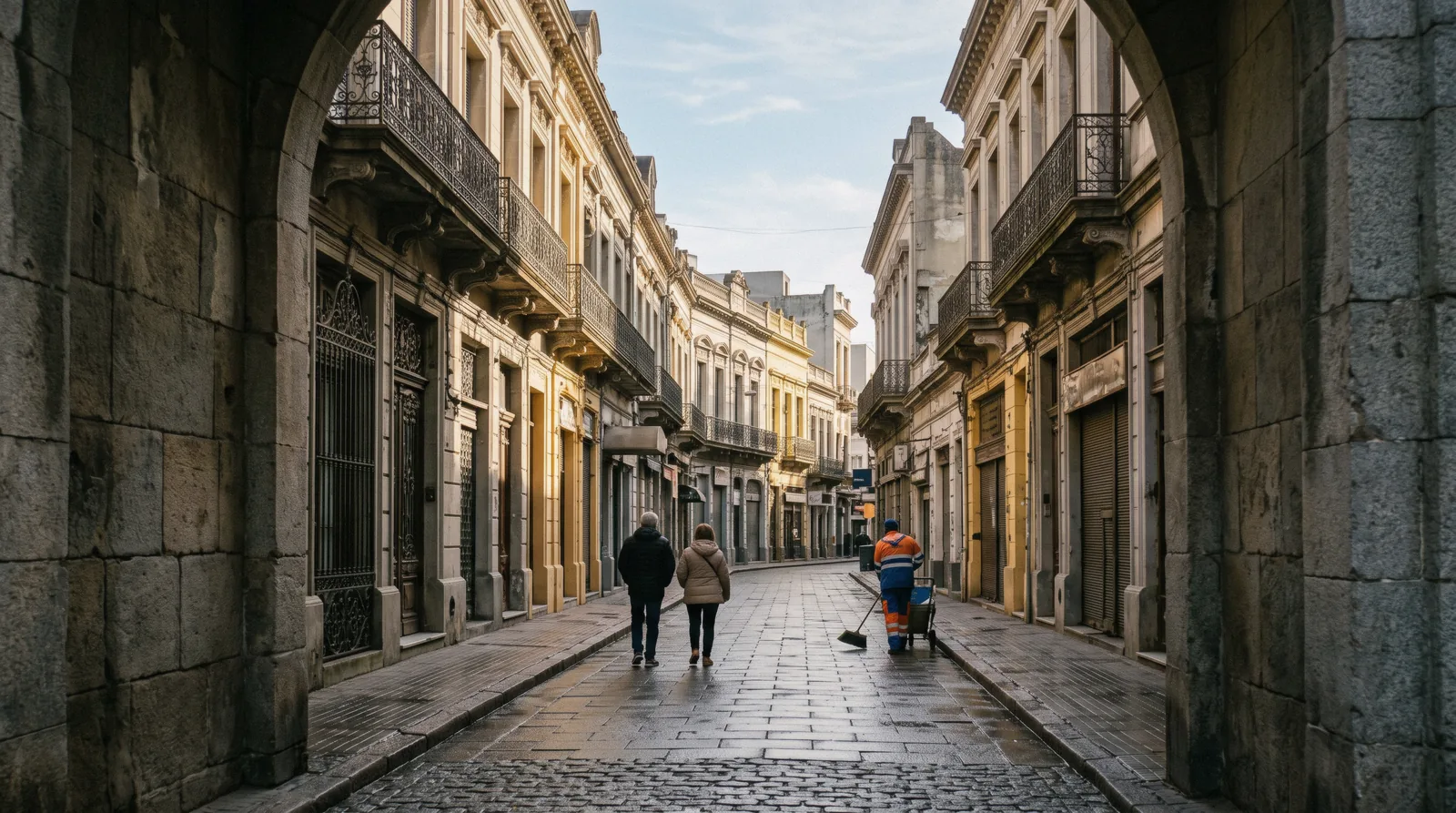
Ciudad Vieja: Walking Montevideo's Old Town
Ciudad Vieja is Montevideo's old town, the walled Spanish town of 1724 that survives as a peninsula of narrow streets between Plaza Independencia and the port. This page walks you through it in order, from the Citadel gate down Sarandí to the Mercado del Puerto, and sorts out the one thing that trips people up: which museums open on which day. It also covers the guided walks, what to do with a few hours off a cruise ship, and where the old town fits among the other things to do in Montevideo.
Quick answer What it is, how long, which day, from the ship
Ciudad Vieja is the old walled Spanish town founded in 1724 on the peninsula at the mouth of Montevideo's port. The walls came down in 1829 and only the Citadel gate survives. Half a day covers the gate, the Sarandí pedestrian street, Plaza Matriz and the Mercado del Puerto. Museums run Monday to Saturday, so save Sunday for the market lunch. From the cruise terminal you simply walk in.
Key takeaways
- The easiest introduction is the Ciudad Vieja walking tour at $20 per person. It runs 2.5 hours, starts in Plaza Independencia in front of the Citadel Gate at 10:30 and 14:30 Monday to Saturday, and at 10:30 on Sunday, with entry to the Artigas Mausoleum, the Cabildo and the Mercado del Puerto included.
- Mind the week. The Cabildo, Museo Gurvich and Museo Andes 1972 list no Sunday hours, so they close on Sunday. Museo Torres García opens every day 10:00-18:00. Plan museums for Monday to Saturday and keep Sunday for the market.
- The port passenger terminal sits on the Ciudad Vieja waterfront, so cruise passengers reach the old town on foot, or book the shore excursion, a 3.5-hour loop that meets and returns in the port for $44.
- End any walk at the Mercado del Puerto, the 1868 iron market by the port. Pay the parrilla lunch with a foreign card or e-money to get 9 percentage points off VAT on restaurant bills until 30 April 2027.
Key facts
Opening hours
| Streets | Open–24 hours, every day |
|---|---|
| Museo Histórico Cabildo, Mon-Fri | 11:00–17:45 |
| Museo Torres García, Daily | 10:00–18:00 |
| Tourist office, Daily | 9:00–17:00 |
Closed Cabildo, Museo Gurvich and Museo Andes 1972 list no Sunday hours
Admission
- Adult
- Streets and the Cabildo museum free, [the Ciudad Vieja walking tour](#tour-16) $20
- Reduced
- Museo Andes 1972 $8 for adults
- Free
- The Cabildo museum, the Cathedral square, Sarandí and the Mercado del Puerto hall
Planning it
- Time needed
- Our estimate: two hours for the walk, half a day with a museum and lunch
- Book ahead
- Optional — walk-up usually fine
- Address
- Ciudad Vieja, 11000 Montevideo, Uruguay (tourist office at Piedras 257 corner Yacaré)
Five ways to see Ciudad Vieja with someone else holding the map, from the $20 group walk that starts at the Citadel Gate to the private and cruise options. Prices are the operators' own listings in US dollars.
The streets are free. Are you paying for a guide's story, for photos of yourself, or for a loop that starts and ends at the ship?
| Option | Price | Length | What you get | Book |
|---|---|---|---|---|
| Ciudad Vieja walking tourFirst-timers who want the history in one morning or afternoon | $20 | 2.5 hours | Group of up to 10 from the Citadel Gate, Artigas Mausoleum, Cabildo and Mercado del Puerto | Check Availability |
| Walking tour with a photographerCouples and solo travellers who want pictures of themselves in the old town | $37.99 | 105 minutes | Up to 8 people, about 40 edited photos by email within 7 days | Check Availability |
| Private must-see sites walking tourFamilies or friends who want their own pace | $31 | 2-3 hours | Private guide, route built around your interests | Check Availability |
| Private walking tourCruise groups who step off the ship and want a guide waiting | $129 per group | 2.5 hours | Private certified guide from the lamp post on Yacaré and Piedras, optional candombe drum class | Check Availability |
| Shore excursion for cruise passengersCruise passengers who want the old town and the rest of the city in one call | $44 | 3.5 hours | Meets in the port, Ciudad Vieja plus the stadium, Pocitos and the Rambla, back to the ship | Check Availability |
Prices per person unless marked. Figures current {checked}.
Ciudad Vieja Walking Tours and Shore Excursions
Every card that walks the old town, plus the hop-on hop-off bus that stops on the Rambla by the market. More across the city on the Montevideo tours page.
 from $20
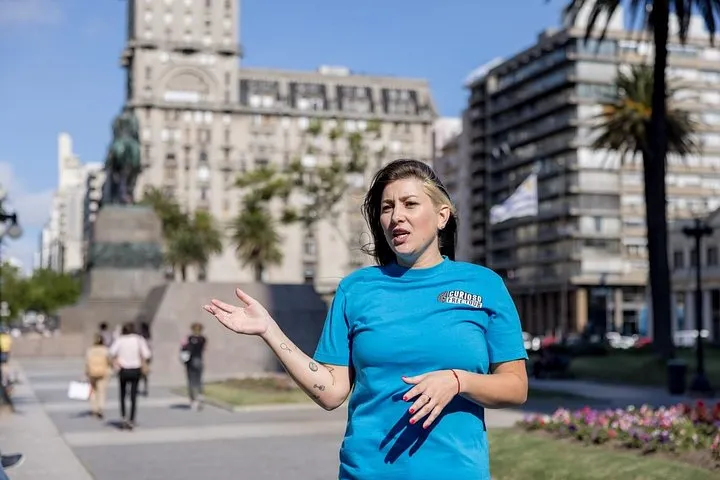
Historical and Cultural Tour of Montevideo Discover Old Town
A 2.5 hour guided walking tour of Montevideo's Old City with entry to three sights included for $20.
Check Availability from $37.99
Montevideo: Walking Tour with Photographer and Audioguide
A 105-minute Old City walk where a professional photographer takes your photos and around 40 edited images arrive by email within 7 days.
Check Availability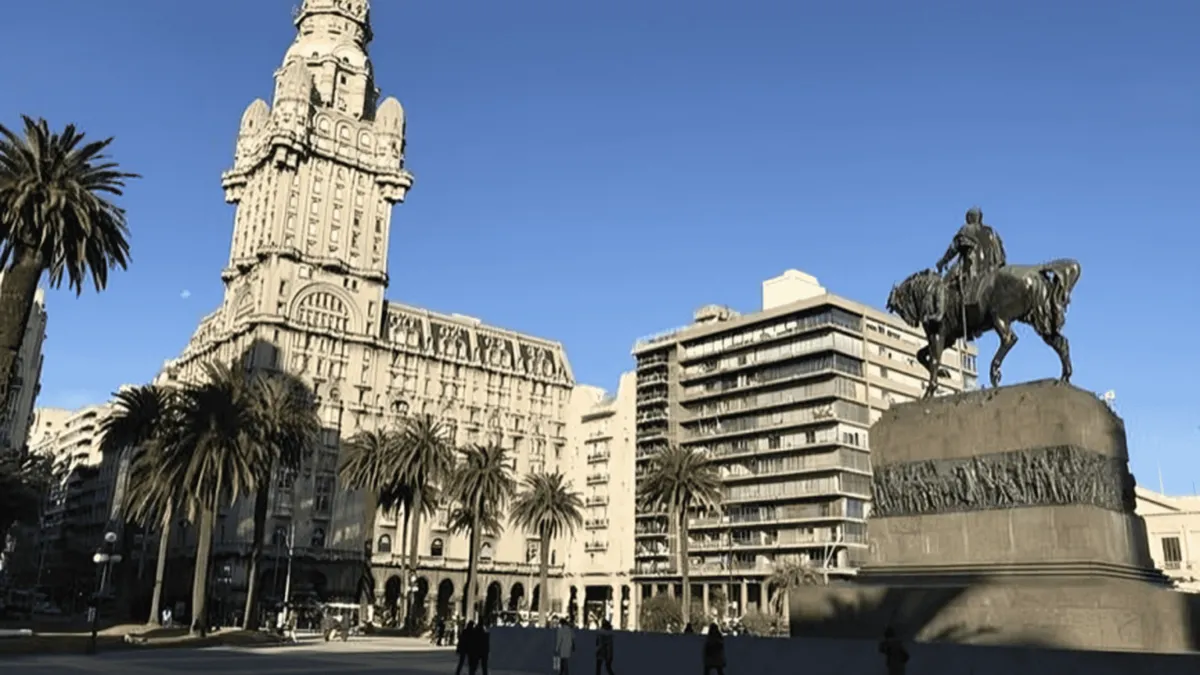 from $31
Montevideo: Must-See Sites Walking Tour With A Guide
A private customized walking tour with hotel transport, museum entry and a drink or food included, from $31 per person.
Check Availability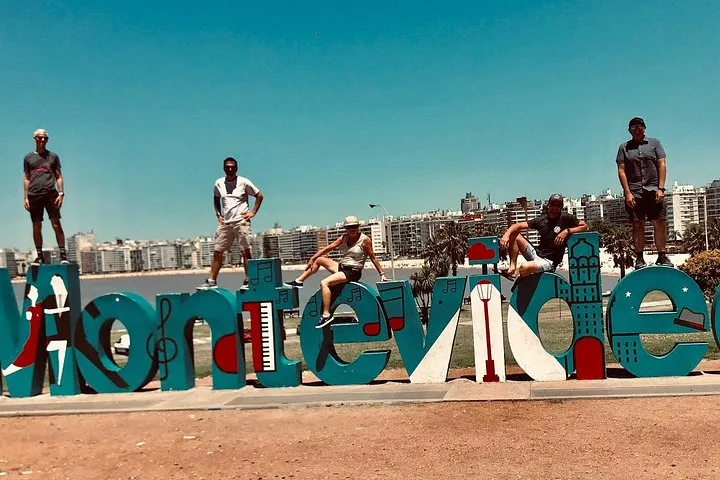 from $129
Private Walking Tour in Montevideo
A private certified-guide walking tour of the old city that starts within walking distance of the cruise port, with an optional candombe drum class.
Check Availability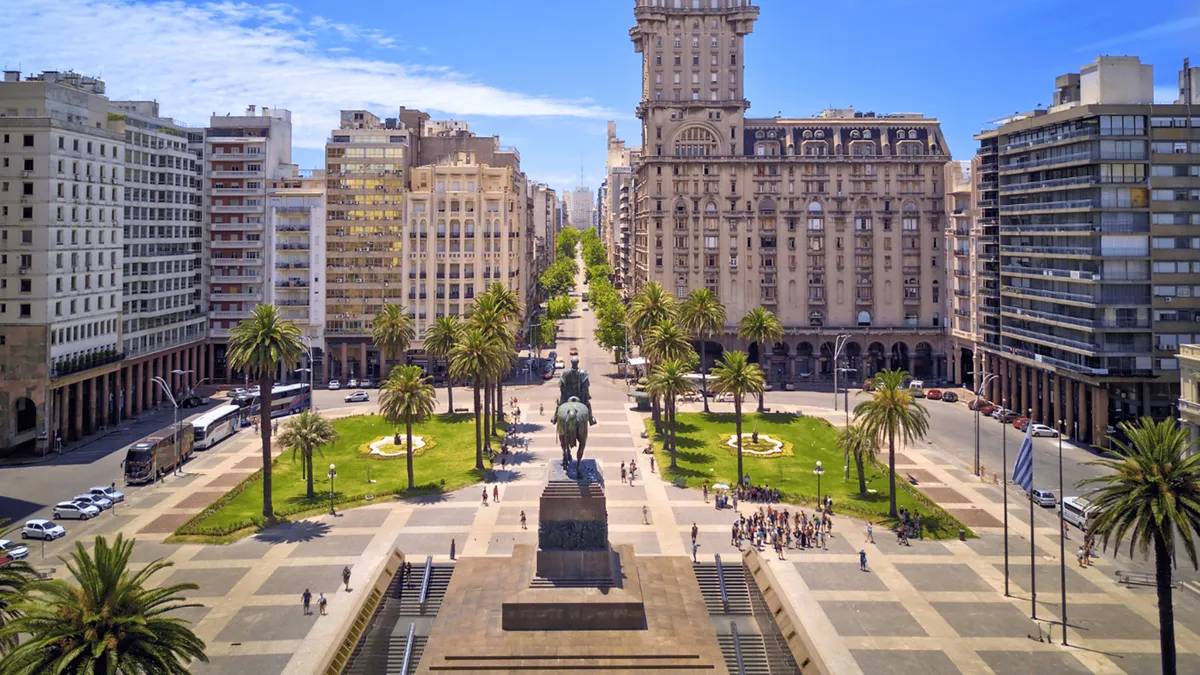 from $44
Montevideo: Shore Excursion for Cruise Passengers
A 3.5-hour port-based city loop for cruise passengers at $44, covering Ciudad Vieja, Estadio Centenario and the Rambla with wheelchair access.
Check Availability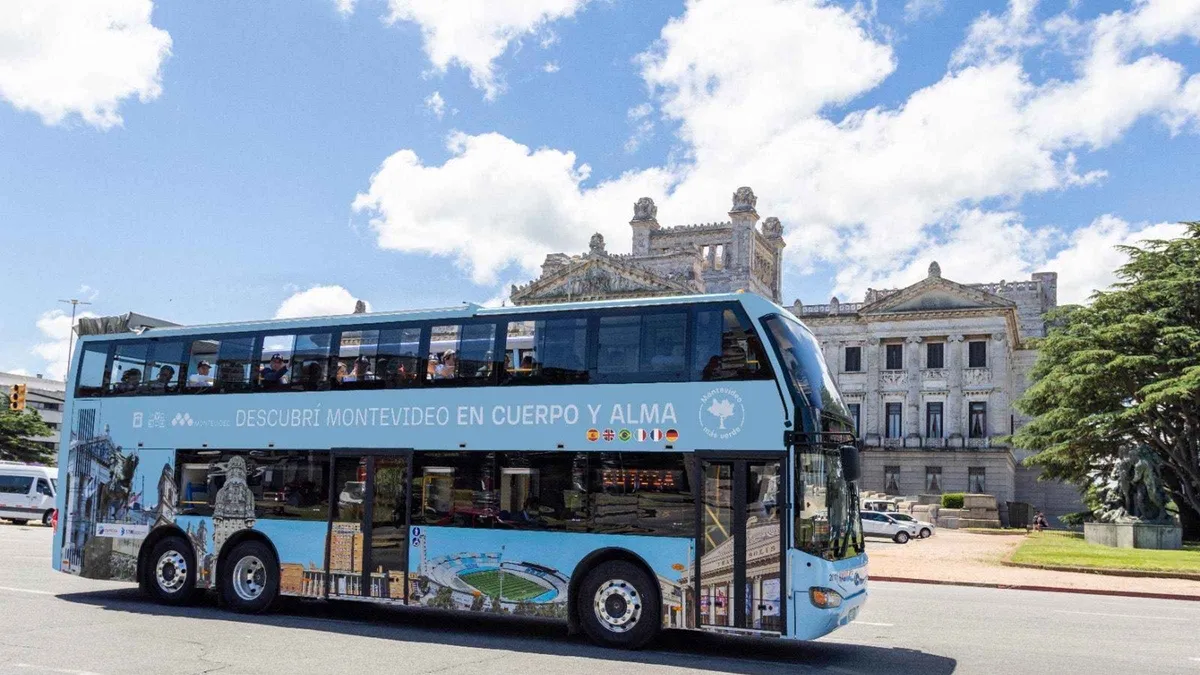 from $25
Montevideo: Sightseeing Hop-On Hop-Off Bus Tour
The cheapest city overview in Montevideo, a two-circuit 24-hour hop-on hop-off pass with audio guide for $25.
Check AvailabilityPrices, ratings and details are the platform's own. Dollar figures are the listed prices. The platform bills in your account's currency.
The Walk: Citadel Gate to the Port
One straight line on foot takes you from Plaza Independencia west to the port. The stops below follow that order.
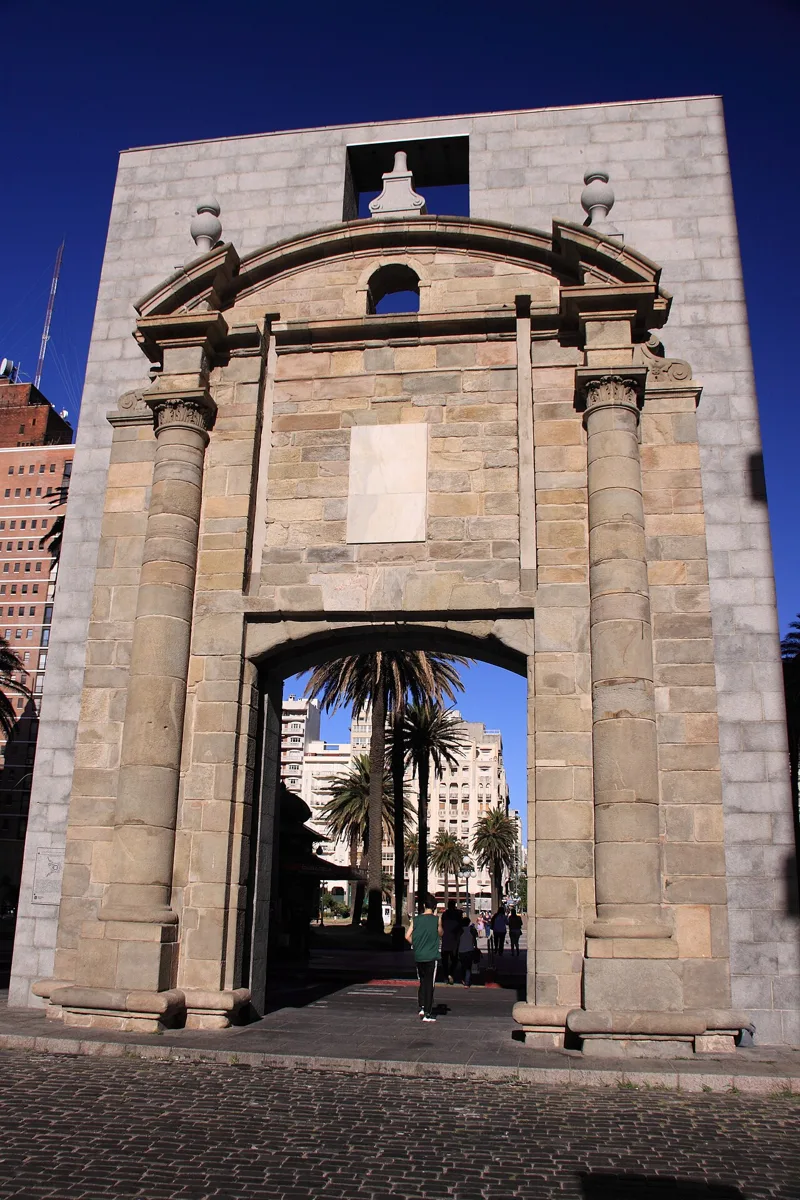
The Puerta de la Ciudadela, the one surviving piece of the colonial fortifications. Photo: Jeepika, CC BY-SA 3.0, via Wikimedia Commons
Puerta de la Ciudadela
This stone gate was the entrance to the Spanish Citadel begun in 1741, which stood where Plaza Independencia is now. When the walls were demolished the gate was taken down stone by stone, used for years as the rear gate of the Escuela de Artes y Oficios, and rebuilt in 1959 a few metres from its original spot, aligned with Sarandí. It was restored again in 2009.
The city's tourism office calls it the imaginary start of the historic walk, and it is exactly where the Ciudad Vieja walking tour and the city's free Saturday walks set off. It stands between Plaza Independencia and the pedestrian street, so it is the natural point to begin your own walk too.
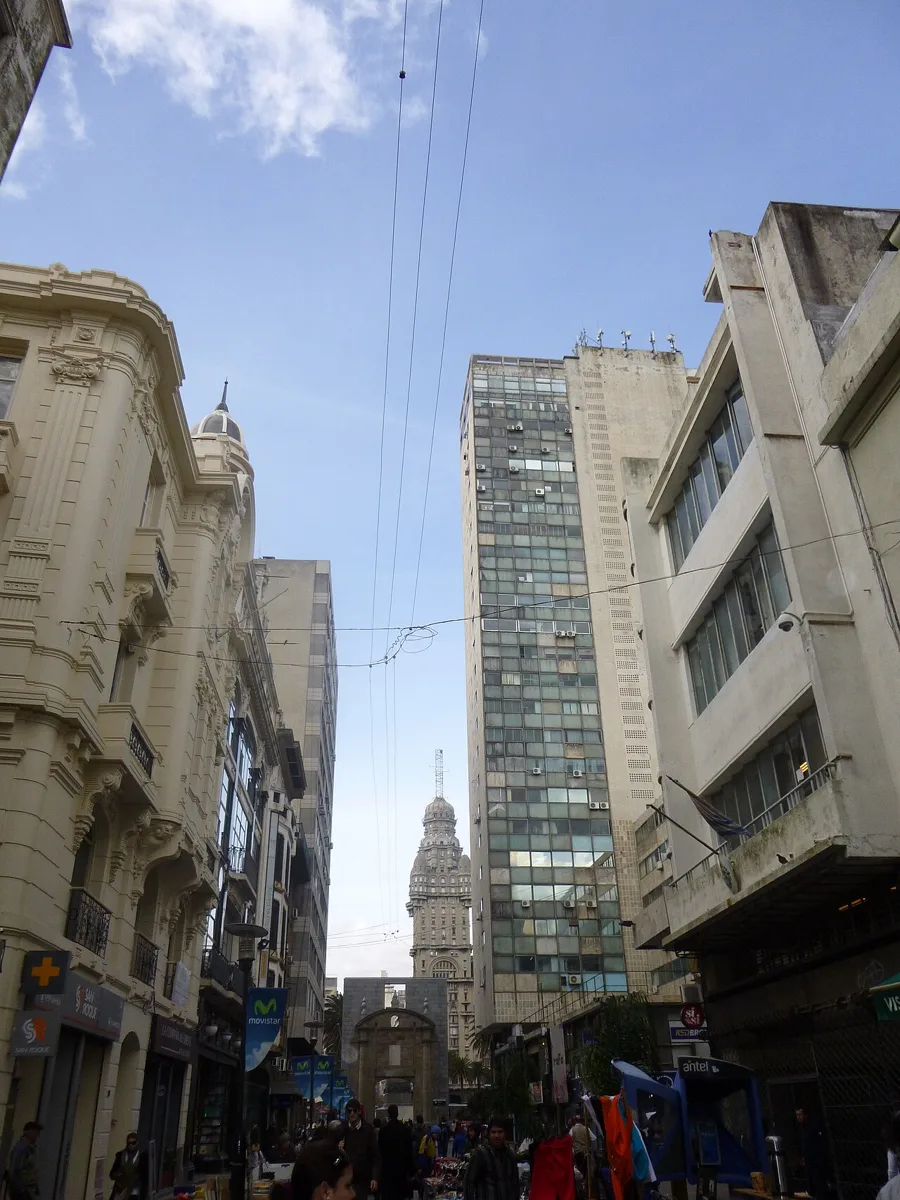
Peatonal Sarandí, the pedestrian spine of the old town, with the gate and Palacio Salvo at the far end. Photo: Andrés Franchi Ugart…, CC BY-SA 3.0, via Wikimedia Commons
Peatonal Sarandí
Sarandí was the old town's main street and has been pedestrian since 1992, extended past Plaza Matriz in 2005. It carries you from the gate to the Cathedral square past galleries, design shops, bookshops and street stalls. Two small museums sit on it.
Museo Torres García, dedicated to the constructivist painter Joaquín Torres García, is open every day 10:00-18:00 with a ramp and lift to all floors. Museo Gurvich keeps shorter days: Monday to Friday 10:00-18:00 and Saturday 11:00-15:00, with no Sunday hours. Weekend stall browsing doubles as shopping in Montevideo, so leave bag space.
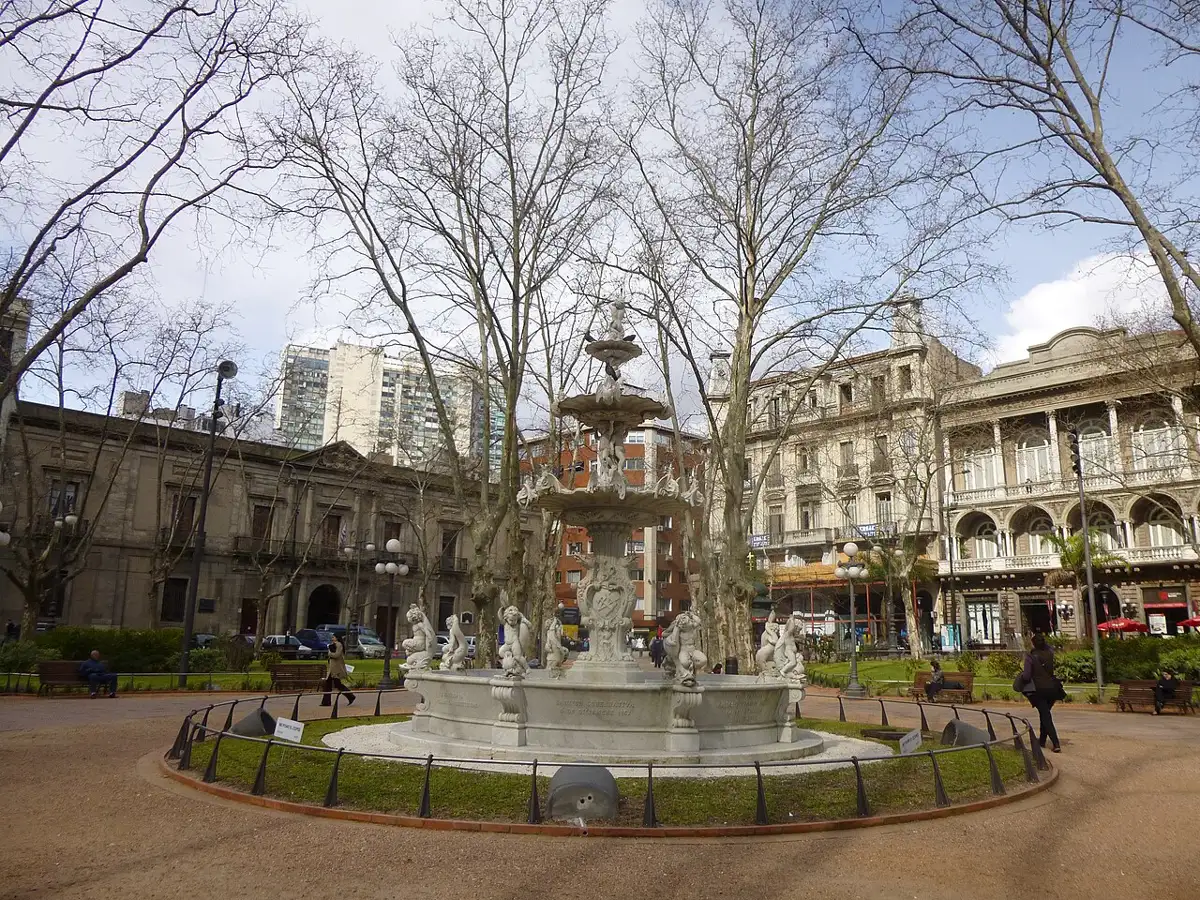
Plaza Matriz and its fountain, with the colonial Cabildo behind the trees. Photo: Andrés Franchi Ugart…, CC BY-SA 3.0, via Wikimedia Commons
Plaza Matriz and the Cathedral
Plaza Matriz, formally Plaza Constitución, is the old Plaza Mayor of the grid town laid out under the Laws of the Indies, the square around which colonial life turned. On the square stands the Cathedral of Montevideo, begun in 1790 and consecrated in 1804, neoclassical and attributed to Tomás Toribio. It was raised to a Metropolitan Cathedral in 1897 by Pope Leo XIII and is a National Historic Monument.
The main door sits 20 metres from Sarandí with a ramp and handrail, and history leaflets in Spanish and English are kept in the sacristy shop. One practical warning: there are no public toilets.
The Cabildo
Facing the Cathedral across the square is the Cabildo y Reales Cárceles, built from 1804 as the town council and jail. The pairing of church and Cabildo on one square was the colonial arrangement of powers, and you can still read it in the architecture. In 1830 the first Constitution of Uruguay was sworn here, and the building housed the General Assembly until 1925.
Today it is the Museo Histórico Cabildo and entry is free, open Monday to Friday 11:00-17:45 and Saturday and holidays 11:00-17:00. Note what is missing from that list: Sunday. Pair it with the Cathedral and the market on a weekday morning, or take the Ciudad Vieja walking tour, which includes entry.
Museo Andes 1972 and Casa de Rivera
Two museums sit a block apart. Museo Andes 1972 at Rincón 619 tells the story of the 1972 Andes air crash in which a chartered flight carrying 45 people went down, and honours the 16 who survived 72 days in the mountains. Admission is $8 for adults, with lower prices for seniors, youths and children, and the visit takes about 60 to 90 minutes. Hours are Monday to Friday 10:00-17:00 and Saturday 10:00-15:00, so it is closed on Sunday and stops early on Saturday.
A block away, the Casa de Rivera was bought in 1834 by Fructuoso Rivera, the first constitutional president, and is now a seat of the National History Museum, open Wednesday to Sunday 12:00-17:45. Entry is free for residents and paid for non-residents, sold through Tickantel, but no price is printed, so bring pesos or a card.
Plaza Zabala and Calle Brecha
Plaza Zabala carries the name of Bruno Mauricio de Zabala, who founded the town between 1724 and 1726 as San Felipe y Santiago de Montevideo. Calle Brecha remembers a harder moment: its name means breach, after the gap British troops opened in the colonial wall during the 1807 invasion. Proof of that wall still turns up.
During works in 2007-2008 a 60-metre stretch of the colonial wall was found in a basement nearby. Stand in the square and you are standing inside the footprint of the fortress town, close to the water that made it worth fortifying.
Pérez Castellano to the Mercado del Puerto
The pedestrian Pérez Castellano runs from Sarandí to the front of the Mercado del Puerto, passing the Mercado de Artesanos craft market on the way. The market itself opened on 10 October 1868, built with iron parts cast at the Union Foundry in Liverpool, and began life as a wholesale market supplying ships and the town. Since the 1970s its stalls have been restaurants, and the parrillada, the mixed grill over wood fire, is the thing to order.
Each restaurant keeps its own hours, so there is no single market opening time. The city tourist office stands right by, at Piedras 257 corner Yacaré, open every day 9:00-17:00, handy for maps and questions. Read up on Uruguayan food before you order.
Teatro Solís
Back at Plaza Independencia on the Ciudad Vieja side stands Teatro Solís, named after the navigator Juan Díaz de Solís. It opened on 25 August 1856 with Verdi's Ernani, after works that began in 1842 and were interrupted by the Siege of Montevideo. Guided visits cost $9.92 (UYU 400) for foreigners, paid at the box office in pesos, and visitors who show the digital proof of payment of the Montevideo tourist tax get half price.
Visit times change, so confirm the day's slots at the box office. Even without a tour you can walk freely through the photo gallery and exhibition rooms.
Source: Descubrí Montevideo, casco histórico, Museo Histórico Cabildo, Catedral de Montevideo, Museo Andes 1972, Teatro Solís.
Which Day to Go: Museum Hours in the Old Town
The rule that shapes an old town day is this: three of its museums close on Sunday, while Monday is a full museum day here, the opposite of many cities. The table sets out the week.
Treat Monday to Saturday as museum days. Note that Saturday afternoon is short: Museo Gurvich and Museo Andes 1972 both shut at 15:00, and the Cabildo closes at 17:00 on Saturdays and holidays instead of 17:45 on weekdays. Sunday flips the script.
The Cabildo, Gurvich and Andes museums all list no Sunday hours, so plan around them, while Museo Torres García runs every day 10:00-18:00 and the Casa de Rivera opens Wednesday to Sunday 12:00-17:45, which makes Sunday the day for those two. Sunday is also the day the Mercado del Puerto gets busiest at lunch, which is a good thing if you like a crowd and musicians. If you want a street fair on Sunday, the Tristán Narvaja market is in Cordón, outside the old town, so see the shopping in Montevideo page for it.
Opening hours of the five old town museums by day of the week, from the city tourism office and the museums' own pages.
| Museum | Monday-Friday | Saturday | Sunday | Entry |
|---|---|---|---|---|
| Museo Histórico Cabildo | 11:00-17:45 | 11:00-17:00 | Closed | Free |
| Museo Torres García | 10:00-18:00 | 10:00-18:00 | 10:00-18:00 | Ask at the door |
| Museo Gurvich | 10:00-18:00 | 11:00-15:00 | Closed | Ask at the door |
| Museo Andes 1972 | 10:00-17:00 | 10:00-15:00 | Closed | $8 with the admission ticket |
| Casa de Rivera (National History Museum) | Wednesday-Friday 12:00-17:45 | 12:00-17:45 | 12:00-17:45 | Paid for non-residents, via Tickantel |
Source: Museo Histórico Cabildo, Museo Torres García, Museo Gurvich, Museo Andes 1972, Casa de Rivera.
How Much Time to Give Ciudad Vieja
The whole old town turns on three things: museum days, a lunch stop at the market, and doing the walk in daylight. The table gives three routings to match the time you have.
Two hours is enough for the spine: the Citadel gate, down Sarandí, a look into Plaza Matriz and the Cathedral, then Pérez Castellano to the Mercado del Puerto. If you would rather have someone else handle the route, the photographer walk fits the slot at 105 minutes and leaves you with about 40 edited photos by email within 7 days. A half day adds one museum and the Cabildo, or hands the whole thing to the Ciudad Vieja walking tour at 2.5 hours with the Artigas Mausoleum entry included.
A full day adds the Andes museum and Torres García, then an early evening walk onto the Rambla as the light drops. Browse the Montevideo tours compared if you want to mix in the beach neighbourhoods instead.
Three routings for Ciudad Vieja by the time you have, with what each costs from the tour listings and museum prices.
| Time you have | Route | What it costs |
|---|---|---|
| Two hours | Citadel gate, Sarandí, Plaza Matriz and the Cathedral, Pérez Castellano to the Mercado del Puerto | Free, or $37.99 for the photographer walk |
| Half a day | The two-hour route plus the free Cabildo and one museum, or the Ciudad Vieja walking tour | Free to $20, plus a market lunch |
| Full day | Add the Museo Andes 1972 and Torres García, end on the Rambla at sunset | $8 for the Andes museum, our sum before lunch |
From the Cruise Ship or the Ferry
The old town is the part of Montevideo you reach first from the water, on foot, with no transport needed.
Cruise Passengers
The passenger terminal sits on the Ciudad Vieja waterfront, and the Mercado del Puerto faces the port, so the old town is the first thing you walk into. The tourist office is at Piedras 257 corner Yacaré by the market, open every day 9:00-17:00, with a 24-hour touch screen outside hours. Three ways to spend your hours: walk the spine on your own using the route above, meet the private walking tour at the black lamp post on the corner of Yacaré and Piedras one block from the port terminal, or book the shore excursion, a 3.5-hour city loop for $44 that meets in the port and returns there, which suits anyone who wants the beaches and stadium added.
See the cruise port guide for the terminal itself.
Ferry Day-Trippers
The direct Buquebus ferry from Buenos Aires takes a little over two hours, according to the city tourism office, and for a day-tripper the old town is the natural first stop. The gate, Sarandí and the market form one short loop, so even a tight ferry day covers the core of the old town. If your legs are done but the day is not, the hop-on hop-off bus stops on Rambla 25 de Agosto de 1825 right by the market and gives you a 24-hour city overview for $25.
Plan the crossing with the Buenos Aires to Montevideo guide.
Why Montevideo Began on This Peninsula
The old town is not a preserved quarter bolted onto a modern city. It is the original Montevideo, and the street plan still shows it.
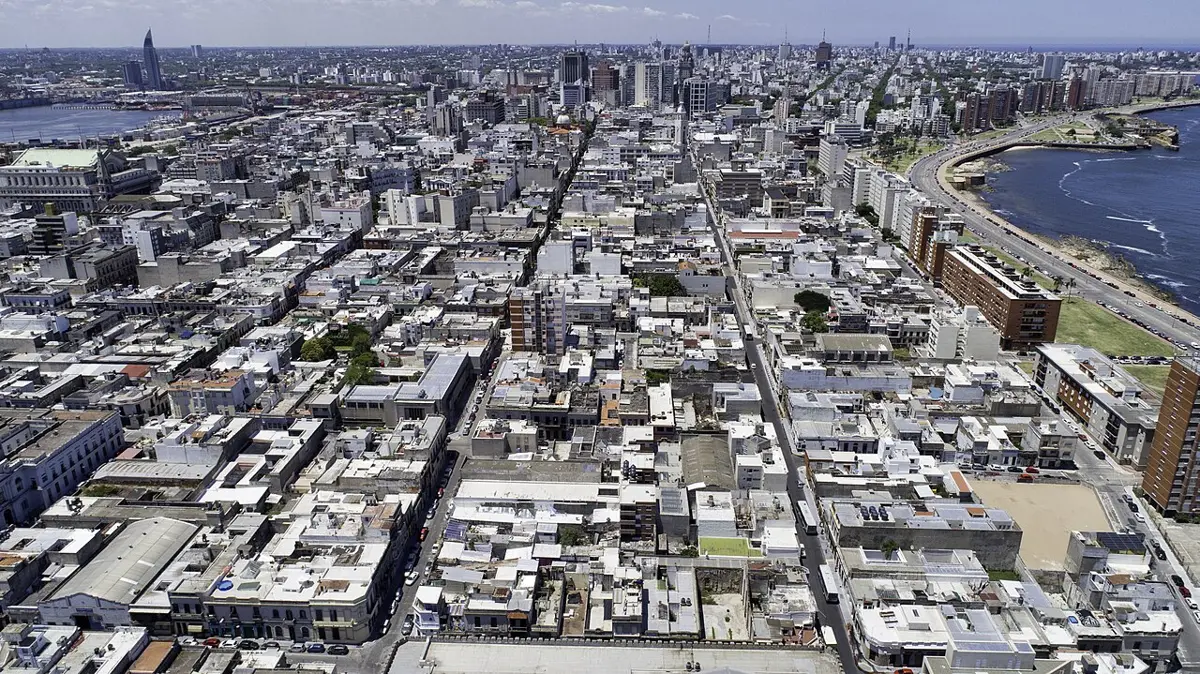
The Ciudad Vieja peninsula from the air, the grid of the old walled town between the bay and the river. Photo: Fedaro, CC BY-SA 4.0, via Wikimedia Commons
A Spanish Fortress Town
Montevideo began as a military project. The Spanish Empire founded the town in 1724 on the peninsula at the entrance of the natural port, naming it San Felipe y Santiago de Montevideo, under Bruno Mauricio de Zabala, who founded it between 1724 and 1726. The grid plan followed the Laws of the Indies, the rules Spain used for colonial towns, which is why the streets still meet at right angles.
Stone walls went up around the town, guarded by the Ciudadela, the fortress begun in 1741 on the land where Plaza Independencia now sits. The walls answered a real threat. In 1807 British troops invaded and opened a breach in them, the breach that gave Calle Brecha its name.
Everything you walk past in the old town sits inside that defended rectangle.
After the Walls
The walls stood until 1829, after independence, and then came down so the town could grow. Only the Citadel gate survives, rebuilt near its original spot in 1959. Plaza Independencia was laid out from 1837 by the architect Carlo Zucchi on the site of the Citadel, and it now marks the seam between the old town and the newer city, where Avenida 18 de Julio begins.
Freed of its walls, the old town became the commercial and financial heart, which is why you find art deco, art nouveau and neoclassical facades between the colonial blocks. The Museo Andes 1972 building itself mixes period handmade bricks with stone recovered from the demolished wall. In 1992 Sarandí was made pedestrian and in 2005 extended past Plaza Matriz, completing the walkable spine most visitors follow today.
Ciudad Vieja in Eight Dates
-
1724
The town is founded
The Spanish Empire founds San Felipe y Santiago de Montevideo on the peninsula at the port entrance, under Bruno Mauricio de Zabala, on a grid plan under the Laws of the Indies.
-
1741
The Citadel begins
Work starts on the Ciudadela, the fortress that will stand where Plaza Independencia is today, guarding the walled town.
-
1790
The Cathedral is begun
Construction starts on the neoclassical cathedral attributed to Tomás Toribio on the old Plaza Mayor, now Plaza Matriz.
-
1804
Cabildo begun, Cathedral consecrated
The town council and jail, the Cabildo y Reales Cárceles, starts rising opposite the Cathedral, which is consecrated the same year.
-
1807
The British breach
British troops invade and open a breach in the colonial wall, the event remembered in the name of Calle Brecha.
-
1829
The walls come down
After independence the walls are demolished so the city can grow. Only the Citadel gate survives, later rebuilt near its original spot in 1959.
-
1868
Mercado del Puerto opens
The iron market by the port, built with parts cast in Liverpool, inaugurates on 10 October as a wholesale market. It becomes a restaurant hall in the 1970s.
-
1992
Sarandí goes pedestrian
The old main street is closed to traffic, then extended past Plaza Matriz in 2005, creating the walkable spine of the old town.
Dates drawn from Wikipedia and the city tourism site descubrimontevideo.uy.
Do and Don't in Ciudad Vieja
Do
- Start at the Puerta de la Ciudadela and walk the line west, so the route reads in the order the town grew.
- Plan the Cabildo, Gurvich and Andes museums for Monday to Saturday, since none lists Sunday hours.
- Have lunch at the Mercado del Puerto and pay with a foreign card or e-money to take 9 percentage points off VAT until 30 April 2027.
- Book the city's free Sábados en Ciudad Vieja walk online in advance, since places are limited and rain cancels it.
- Use the tourist office at Piedras 257 corner Yacaré, open every day 9:00-17:00, for maps and current opening details.
Don't
- Don't plan your museum day for Sunday. Only Torres García and the Casa de Rivera will be open.
- Don't leave the Andes museum for a Saturday afternoon. It closes at 15:00 and last entry is 30 minutes before closing.
- Don't walk alone downtown or in the port area at night or on weekends, per UK foreign travel advice.
- Don't use street ATMs. Use machines inside malls or banks.
- Don't look for a single market opening hour at the Mercado del Puerto. Each restaurant keeps its own schedule.
Five Things Most Visitors Do Not Know
- The stones of the demolished colonial wall were recycled. The building that houses the Museo Andes 1972 mixes period handmade bricks with stone from the colonial wall torn down in 1829. (mandes.uy) - A 60-metre stretch of that wall survived underground.
It was found in a basement during works in 2007-2008. (Wikipedia) - The Puerta de la Ciudadela you photograph today is not in its first position. It was dismantled stone by stone, served as a rear gate of a trade school, and was rebuilt a few metres away in 1959.
(Wikipedia) - The Ciudad Vieja museums close on Sunday, not Monday. The Cabildo, Gurvich and Andes museums list no Sunday hours, the reverse of the museum pattern most travellers expect. (descubrimontevideo.uy) - The 'medio y medio', the sweet sparkling wine mixed with dry white wine that the market bars pour, was invented inside the Mercado del Puerto, a National Historic Monument since 1976.
Ciudad Vieja on the Map
The old town from the Citadel gate at its eastern edge to the Mercado del Puerto on the port, with the museums between.
Coordinates from Wikidata and OpenStreetMap.
Next Stops From Ciudad Vieja
Three pages pick up where the old town walk ends.
Mercado del Puerto
The 1868 iron market at the port end of the walk, now a hall of wood-fired grills.
Plaza Independencia
The square outside the Citadel gate, with the Artigas statue, the free mausoleum and Palacio Salvo.
Museo Andes 1972
The memorial to the 1972 Andes crash at Rincón 619, $8, closed on Sunday.
Ciudad Vieja Questions
Where is Ciudad Vieja?
It is the old quarter of Montevideo, on the peninsula at the entrance of the city's natural port, bounded by Plaza Independencia on one side and the water and port on the other. The cruise passenger terminal sits on its waterfront, and Avenida 18 de Julio begins at its eastern edge.
What is the Ciudad Vieja in Montevideo?
Ciudad Vieja means old city. It is the original walled Spanish town of 1724, San Felipe y Santiago de Montevideo, whose grid streets, Citadel gate, Cathedral and Cabildo survive. After the walls came down in 1829 it became the financial district, and today it is the walkable core of museums, cafes and the Mercado del Puerto.
Who founded Ciudad Vieja?
The Spanish Empire founded the town in 1724 under Governor Bruno Mauricio de Zabala, who established the settlement there between 1724 and 1726. The grid plan followed the Spanish Laws of the Indies, and Plaza Zabala in the old town carries the founder's name.
What is there to do in Ciudad Vieja?
Walk the line from the Citadel gate down Peatonal Sarandí to Plaza Matriz, the Cathedral and the free Cabildo museum, visit the Museo Andes 1972 or Museo Torres García, then eat a parrilla lunch at the Mercado del Puerto. Guided options range from the $20 walking tour to a walk with a photographer. See more Montevideo attractions.
How far is the old town from the cruise port?
It is beside it. The passenger terminal stands on the Ciudad Vieja waterfront and the Mercado del Puerto faces the port, so no distance figure or bus is needed. The private walking tour meets one block from the terminal, at the lamp post on Yacaré and Piedras. Details in the cruise port guide.
Is Montevideo walkable from the cruise port?
Yes. The whole old town spine, gate to market, is a pedestrian route that starts at the terminal's doorstep. If you want to go beyond it, the shore excursion meets in the port and covers the beaches, stadium and Rambla in 3.5 hours before returning you to the ship.
Is Ciudad Vieja safe?
By day the streets are busy with office workers, shoppers and tours. UK foreign travel advice suggests avoiding walking alone downtown or in the port area at night and on weekends, and using ATMs inside malls or banks rather than on the street. Keep to busy, lit streets after dark and watch bags in crowds. More in is Montevideo safe.
Where Ciudad Vieja Fits in a Montevideo Trip
Give the old town your first morning. The gate, Sarandí, the Cathedral square and a market lunch fill it naturally, and the museums open from 10:00 or 11:00 if you start early. Keep the afternoon for the other Montevideo: the Rambla along the water or the beach at Pocitos, both east of the old town.
In two to four days you can add the Museo del Carnaval, the Palacio Legislativo and a day trip to Punta del Este or Colonia del Sacramento. If you are choosing where to sleep, staying in the old town puts the port, the theatre and the market at your door, while the beachside barrios trade history for sand. Compare options on the Montevideo hotels page, and see what to see in Montevideo for the rest.
Ciudad Vieja on Film
Three street-level walks through the old town, from the gate to the port.
4K Walk Ciudad Vieja Montevideo Uruguay, walking tour
A full walk through the old town streets.
Video: 4K WALKWalking in Ciudad Vieja Montevideo 4K60FPS, Old Town Street Walk
A slow walk along the pedestrian streets.
Video: Relaxing Walks & RoadsWalking Tour Ciudad Vieja, Montevideo, Uruguay
The old town on an ordinary day, shops open.
Video: STREETVIBESPrices, hours and terms are set by the venue or operator and confirmed at checkout.
We may earn a commission if you book through one of our links, at no extra cost to you. Full affiliate disclosure