 Montevideo City Guide
Uruguay Wine: Tannat and the Wineries Near Montevideo
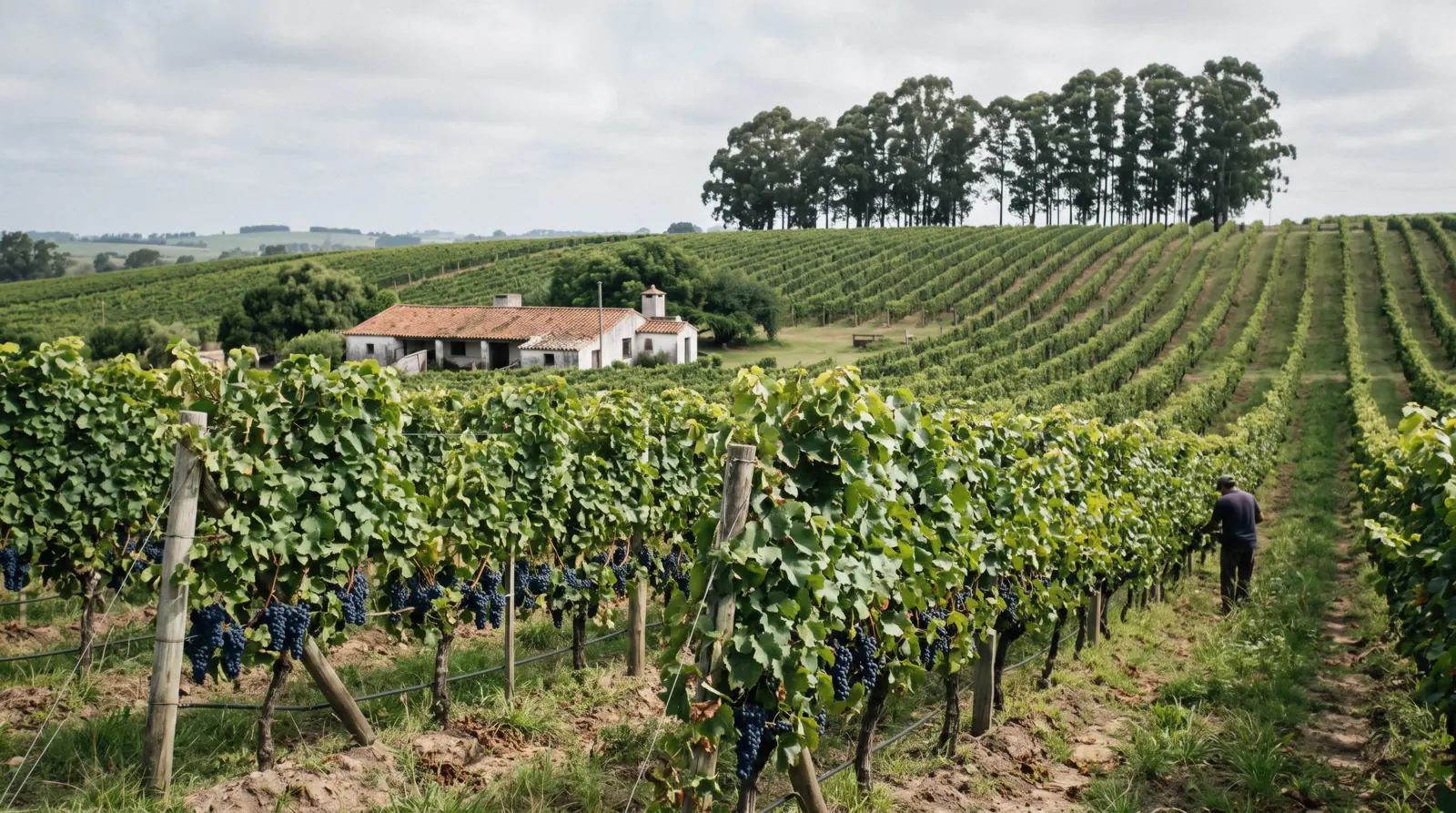
Uruguay wine means Tannat first, a grape brought from south-west France in 1870 that Uruguay now makes more of than its home region. This page explains Tannat and the country's other grapes, the six wine regions, which wineries near Montevideo you can visit and what each tasting costs, and the VAT cut you get by paying with a card. For more ideas around the capital see things to do in Montevideo and the full range of Montevideo tours.
Quick answer Tannat, where the wineries are, what a tasting costs
Uruguay wine is built on Tannat, a red grape planted here from 1870 that the country now produces more of than its French home region. The vineyards sit in the Canelones belt around Montevideo, so a tasting is a half day, not a road trip. The cheapest bookable visit costs $25.70 per person. Paying by card takes 9 percentage points off VAT on tastings until 30 April 2027.
Key takeaways
- The cheapest way in is the Bodega Santa Rosa tour with four wines at $25.70 per person, with a cold-cuts table and the underground cava included.
- The Bouza tasting with hotel pickup gets you to the Bouza family winery in Melilla, ranked 73 in the extended list of The World's 50 Best Vineyards 2026. Read more at Bodega Bouza.
- Paying by credit card, debit card or e-money cuts 9 percentage points off VAT on registered tastings until 30 April 2027. See how money works at Uruguay currency.
- The private winery lunch pairs a gourmet lunch with more than four wines but is non-refundable, so commit only when your plans are fixed.
Montevideo Wine Tours Compared
The five bookable winery visits near Montevideo, with prices in US dollars as listed by the operators.
| Visit | Price | Wines and food | Transport | Rating |
|---|---|---|---|---|
| Bodega Santa Rosa tour, tasting and cold-cuts table | $25.70 | 4 wines with breads, cold cuts, cheeses and minced meat | None stated, arrive by taxi or bus | 4.9 (86) |
| Castillo Viejo tour and premium tasting | $50 | 5 Catamayor wines with a Mediterranean table | Not included, can be arranged extra | 4.8 (25) |
| Pizzorno Winery lunch and tasting | $115 | 4 wines with snacks and a 3-step lunch with wine | Air-conditioned vehicle | 4.8 (79) |
| Bouza tasting with hotel pickup | $95 | 4 wines with 4 cheese snacks | Air-conditioned minivan, hotel pickup | 4.4 (74) |
| Private winery visit with paired lunch | $195 | More than 4 wines with a paired gourmet lunch | Montevideo port or hotel pickup | 4.9 (27) |
Four visits offer free cancellation up to 24 hours while the private lunch visit is non-refundable. Figures current {checked}.
Winery Visits From Montevideo
These five visits run from the city into the Canelones and Montevideo vineyard belt, most in a half day.
 from $25.70
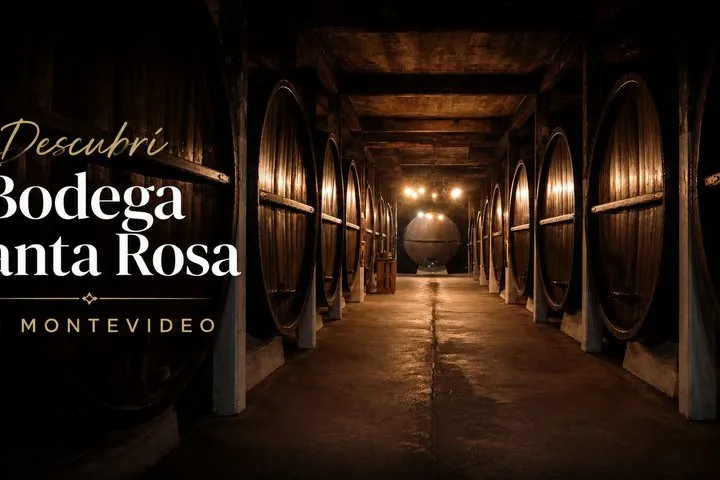
Montevideo Bodega Santa Rosa : tour - Tasting - Lunch
A 2-3 hour winery tour with 4-wine tasting and a cold-cuts table from $25.70, wheelchair accessible, near Montevideo.
Check Availability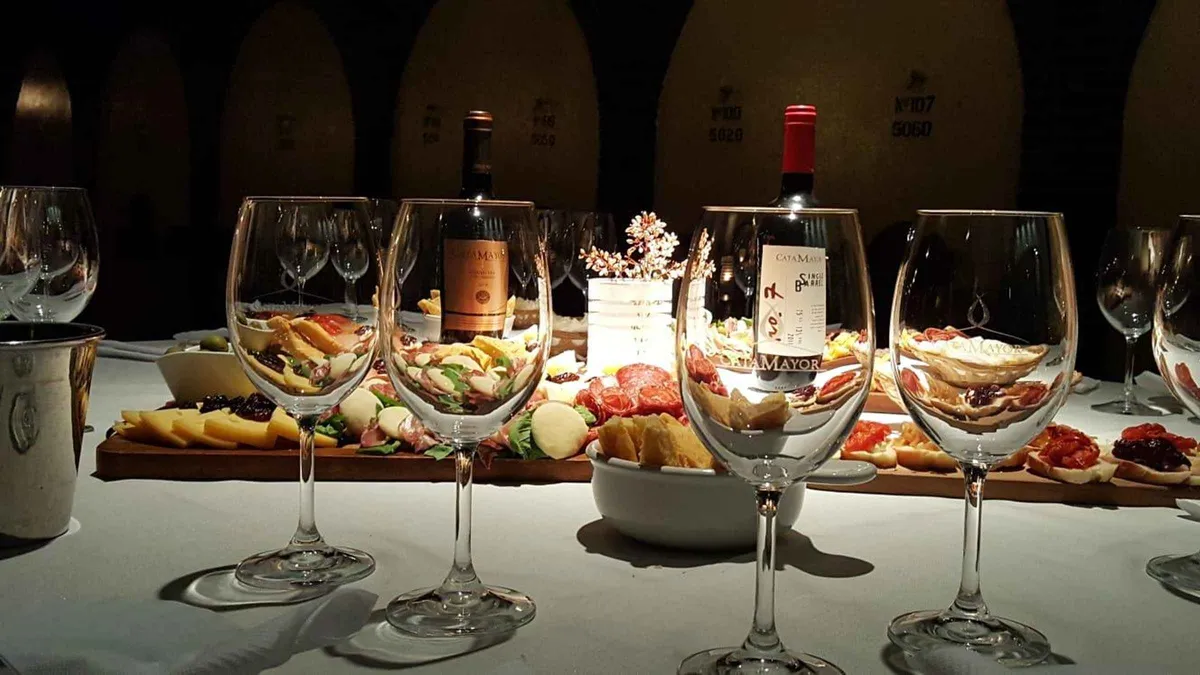 from $50
Castillo Viejo Winery: Tour & Premium Tasting
A winemaker-led cellar tour where you label your own Gran Reserva and taste five Catamayor wines with food, for $50.
Check Availability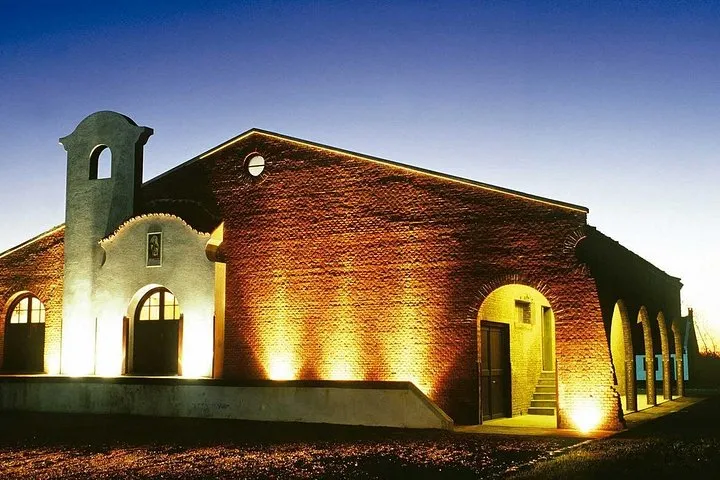 from $95
Bouza Winery Tastings and Tapas (Esp, Eng, Port)
A short hotel-pickup winery trip with a guided Bouza visit and a tasting of four wines with cheese snacks, no lunch.
Check Availability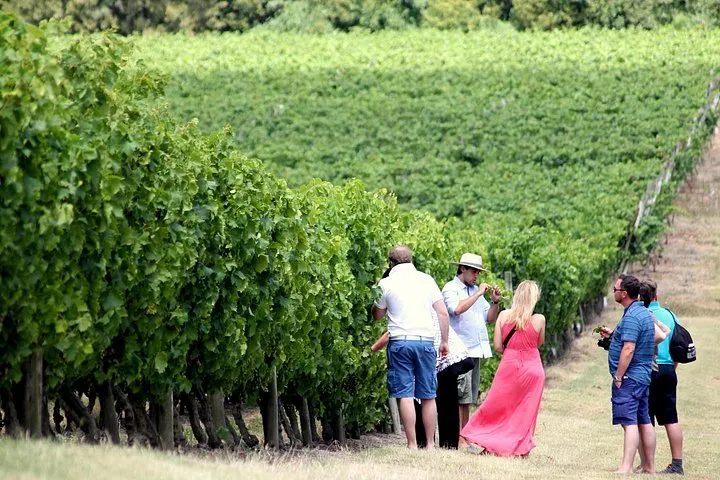 from $115
Pizzorno Winery Lunch and Tasting
A short half-day winery lunch trip with 4-wine tasting, priced per person and capped at 14 travelers.
Check Availability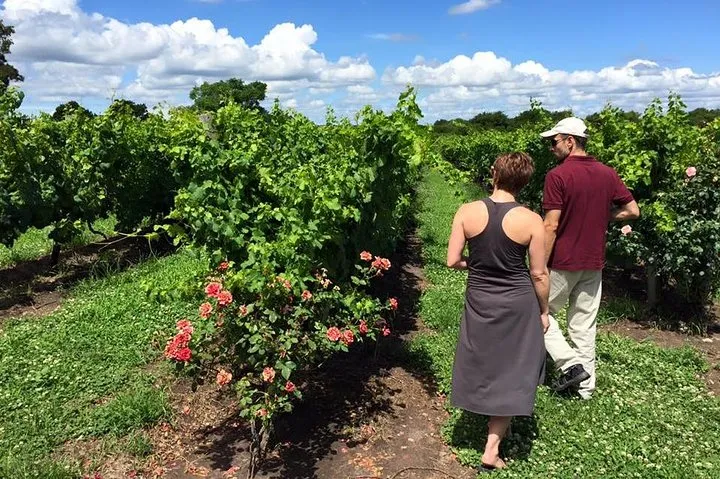 from $195
Uruguay Winery Visit and lunch with Wines!
A private half-day winery visit with a paired gourmet lunch and over four Tannat-focused tastings, though bookings are non-refundable.
Check AvailabilityPrices, ratings and details are the platform's own. Dollar figures are the listed prices. The platform bills in your account's currency.
Tannat: Uruguay's Grape
Tannat is the red wine this country is known for, and its history here is short and well documented.
From Madiran to Salto
Tannat arrived in Uruguay around 1870, brought from south-west France by Pascal Harriague. Two vineyards anchored the era. Harriague planted in San Antonio Chico in the northern department of Salto, and Francisco Vidiella set up a farm in Colón, which sits inside Montevideo department.
Uruguay today is the main producer of Tannat in the world, with volumes above those of the grape's home region. The young industry took a hard hit in 1898 when phylloxera arrived, forcing growers to graft their vines onto resistant rootstocks. That work saved the vineyards and set up the modern wine economy.
The state body INAVI, the Instituto Nacional de Vitivinicultura, was created by law on 10 November 1987 and has its seat in Las Piedras in Canelones, which tells you where the centre of gravity lies. Its founding wine law dates back to 1903.
What Tannat Tastes Like
Tannat makes deeply coloured, very tannic reds with a slightly hard acidity, built to age. Bodega Bouza describes it as producing powerful, structured wines suited to ageing, and it blends Tempranillo with Tannat as well. The other famous red wines from Uruguay come from the same French shelf: Merlot, Cabernet Sauvignon, Cabernet Franc and Marselan, plus Pinot Noir where the climate suits it.
At Bodega Bouza, Tannat is the variety with the most area planted and appears in all five of the family's vineyards, from Melilla near Montevideo bay to Punta Negra by the coast in Maldonado. Practically, this means any tasting you book near Montevideo is likely to pour Tannat. If you only learn one name before your trip, learn this one.
Ask each winery to pour an old vintage beside a young one and you will see what the grape is built for.
Source: INAVI: varieties, INAVI: history, INAVI: wine in Uruguay, Bodega Bouza: vineyards.
Beyond Tannat: The Other Grapes
Tannat leads the list but Uruguayan wineries plant far more than one grape.
INAVI lists the main red grapes as Tannat, the flagship, then Merlot, Cabernet Sauvignon, Cabernet Franc, Marselan and Pinot Noir. Cabernet Franc appears in rosé and red forms alike, both poured on the Castillo Viejo tasting. The whites are Sauvignon Blanc, Chardonnay, Viognier and Albariño, which INAVI describes as gaining recognition.
Albariño is the interesting one. Bodega Bouza planted Uruguay's first Albariño in 2001, with the first harvest in 2004, drawn by the family's Galician roots. It also grows Tempranillo, another Iberian link.
What this means for a visitor is breadth: a single tasting near Montevideo can move from a crisp coastal Sauvignon Blanc through an oaked Chardonnay to a dense Tannat without leaving the table. At Bouza's Las Espinas vineyard in Maldonado, 6.10 hectares hold Chardonnay, Pinot Noir, Tannat and Merlot together, 3 km from the sea.
Source: INAVI: varieties, Bodega Bouza: history, Bodega Bouza: Las Espinas.
Uruguay's Six Wine Regions
INAVI divides the country into six wine regions, and they are not equal in size or in reach.
The regions as INAVI defines them, with the departments each covers and what the institute says sets them apart.
| Region | Departments | What sets it apart |
|---|---|---|
| South | Canelones, Montevideo, San José | The most vineyards, over 70% of the country's wineries, no irrigation needed because rainfall suffices |
| Atlantic | Maldonado, Rocha | The emerging region, with crystalline soils near Laguna Garzón estimated at 2,500 million years old |
| Litoral | Colonia, Río Negro, Soriano | Colonia holds the country's oldest commercial winery, with stony soils near Carmelo and the San Juan river |
| North | Artigas, Salto, Paysandú | Where Tannat was first planted at San Antonio Chico in Salto |
| North-east | Rivera, Tacuarembó | Cerro Chapeu vineyards at up to 220 m altitude |
| Centre | Durazno, Florida, Lavalleja | Warmer and sunnier, Durazno ripens early and avoids late autumn rain |
Why the South Matters to a Visitor
Over 70% of the country's wineries sit in the South region, and Canelones alone produces about 60% of the wine. Montevideo department holds the country's oldest vineyards, going back to Francisco Vidiella's planting at Colón around 1870. Rainfall in the south is sufficient that irrigation is unnecessary, which shapes the style.
For you the arithmetic is simple: the wineries are close. Canelones, Montevideo and San José form a belt around the capital, so a tasting is a half-day trip by car or van rather than an overnight run. The visits on this page all depart from Montevideo and return the same day.
If you want to go further, see our pages on day trips from Montevideo for the Atlantic coast near Punta del Este and the Litoral side toward Colonia.
Source: INAVI: regions.
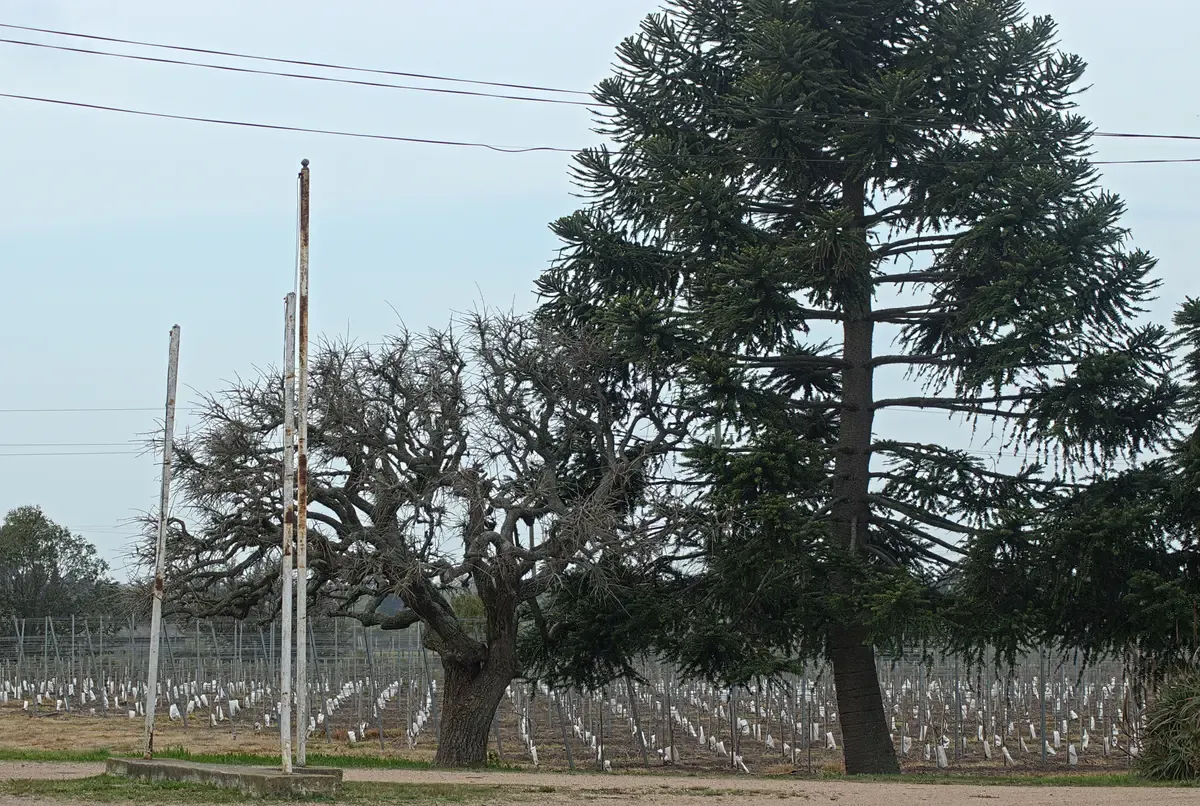
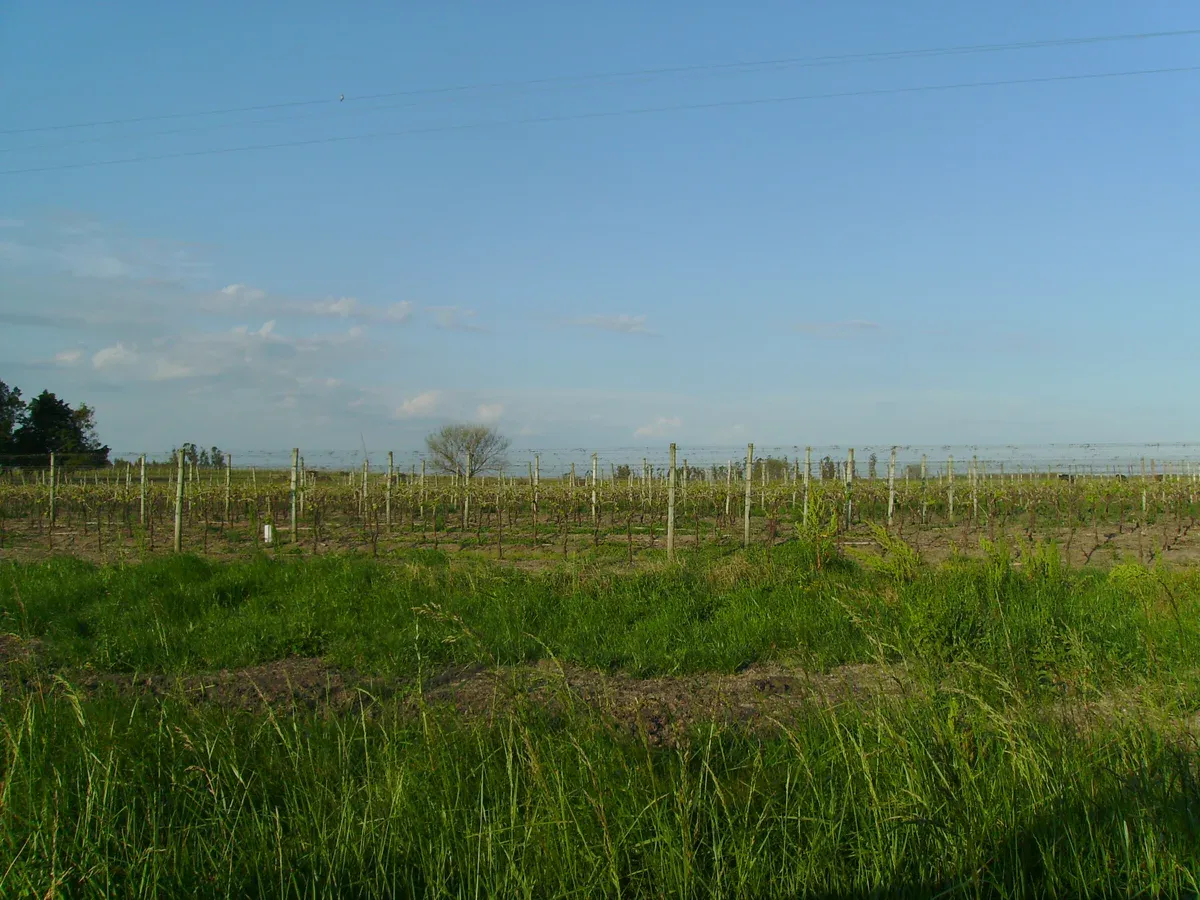
Uruguay Wineries You Can Visit Near Montevideo
INAVI keeps a register of wine-tourism establishments, 44 of which offer tasting tours, and it advises contacting wineries beforehand to secure availability.
Bodega Bouza in Melilla
Bodega Bouza is a family winery in Melilla, inside Montevideo department. The family entered wine in 1998 by buying a 35-year-old vineyard in Las Violetas, Canelones, then in 2001 bought a property in Melilla with an old winery that had worked through the 1950s and 1960s, restored it and planted new vineyards. The Melilla site opens every day 11:00-18:00 and sits about 15 minutes from central Montevideo by the winery's own estimate, with guided visits at 11:00, 13:30, 15:00 and 16:30.
A direct tasting of 4 wines with 4 paired bites costs UYU 2,115 ($52.47) per person. The Garage, where tastings run among the family's classic cars, opened in 2017. The winery was ranked 73 in the extended top 100 of The World's 50 Best Vineyards 2026.
Details in our Bodega Bouza guide, or book the Bouza tasting with hotel pickup.
Castillo Viejo in Las Piedras
Castillo Viejo sits at Ruta 68 km 24 in Las Piedras, in the heart of Canelones, and INAVI lists it among its registered wine-tourism establishments. The winery belongs to the Etcheverry family, which has run it across generations, and its premium line is the Catamayor range. The Castillo Viejo tour lasts about 2 hours and costs $50 per person. The unusual part is the labelling: you hand-label a bottle of Gran Reserva in the bottling plant, then move to the underground cellar for a tasting of five Catamayor wines with a Mediterranean table of artisanal bread and an empanada.
Two practical warnings. Transport is not included but can be arranged at extra cost, and the visit is not suitable for wheelchair users or people with mobility impairments. Bare feet are not allowed.
Free cancellation applies up to 24 hours before.
Bodega Santa Rosa
Bodega Santa Rosa is the cheapest entry into Uruguay wine on this page, at $25.70 per person for the winery tour with tasting. The winery cites more than 125 years of uninterrupted wine history and eight generations of family tradition. The visit runs 2 to 3 hours and covers the winery and production facilities, including the underground cava, followed by a welcome drink and a tasting of 4 wines.
The food is generous for the price: a table of homemade breads, cold cuts, cheeses and minced meat, with some options adding a Medio y Medio sparkling wine and coffee. Groups are capped at 24 people and the winery is wheelchair accessible, with public transport nearby. The operator suggests arriving by a transfer coordinated with the winery, Cabify, Uber, taxi or bus.
Minimum age 15 for younger visitors, 18 to drink. Free cancellation up to 24 hours before.
Pizzorno
Pizzorno is the lunch option in the mid-price range. The Pizzorno winery lunch and tasting costs $115 per person, lasts 4 to 5 hours and is capped at 14 travellers, travelling in an air-conditioned vehicle. On site you get a tasting of 4 wines accompanied by snacks and a 3-step lunch with wine. One booking warning matters here: the booking page both includes the lunch and lists tasting and lunch among the exclusions, so confirm exactly which option you bought covers food and drink before you go.
The tour is wheelchair accessible, children from 3 can join at a youth price that covers transport only, and the minimum drinking age is 18. The operator also flags it as not recommended for travellers with poor cardiovascular health. Free cancellation up to 24 hours before.
Other Registered Wineries
The INAVI register runs well beyond the four wineries above. Closest to Montevideo, Bodegas Carrau is in Colón in the capital's own department and cites more than 265 years of family wine tradition. Antigua Bodega Stagnari sits at Ruta 5 km 20 in Santos Lugares, and Bodega Familia Deicas is at Ruta 5 km 38.2 in Juanicó, both in the Canelones belt.
Fallabrino is listed at Colón-Melilla and Beretta carries a family tradition since 1913 in Melilla. Bodega Ariano, founded in 1929, is at Ruta 48 km 15. Further out, Alto de la Ballena is on Ruta 12 km 16.4 in the Sierra de la Ballena east of the capital, planted from 2001, and Bodega Oceánica José Ignacio is on Ruta 9 km 157 near the coast.
Contact any of them before setting out to confirm times and availability, as INAVI advises.
The VAT Cut on Winery Tastings
Winery visits are one of the travel services covered by Uruguay's VAT cut for anyone paying electronically.
Paying by credit card, debit card or e-money takes 9 percentage points off VAT on guided visits and wine tastings at wine-tourism establishments registered with the Ministry of Tourism, among other tourist services. The scheme runs until 30 April 2027. The discount is taken off the bill at payment, so there is no refund desk and no paperwork to carry.
For some establishments the reduction is applied as a 7.38% discount on the total instead. The practical step: before you book, ask the winery whether it is registered with the Ministry of Tourism as a wine-tourism establishment, and pay by card rather than cash to trigger the cut. The same rule covers restaurant meals and car rental, so it stacks with a wine-country lunch.
For how the peso and cards work day to day, see Uruguay currency. Carry pesos anyway for small wineries that may not process cards at the door.
Source: IMPO: Decreto 235/026, Uruguay Natural: benefits for non-residents.
Next Stop From Uruguay Wine
The winery with its own page, and the day trips that cross other wine regions.
Bodega Bouza
The Melilla winery with tastings at 11:00, 13:30, 15:00 and 16:30, a classic car garage and a second tasting room near Punta Negra.
Colonia del Sacramento
The UNESCO river town in the Litoral wine region, where Colonia department holds the country's oldest commercial winery.
Punta del Este
The resort peninsula in Maldonado, the Atlantic wine region INAVI calls the country's emerging one.
Uruguay Wine Questions
Does Uruguay have good wine?
Yes, and the evidence is structural rather than promotional. Uruguay is the main producer of Tannat in the world, with volumes above the grape's home region in south-west France. INAVI regulates the industry under a wine law dating to 1903. Bodega Bouza was ranked 73 in the extended top 100 of The World's 50 Best Vineyards 2026. For a first-time visitor, the practical test is easy: book any of the tastings near Montevideo and judge for yourself, starting with the options in things to do in Montevideo.
What is the best wine from Uruguay?
Tannat is the flagship grape, so the country's most characteristic wines are Tannat reds and blends built around it. Rankings are thin beyond that, but one data point stands out: Bodega Bouza was placed 73 in the extended top 100 of The World's 50 Best Vineyards 2026, and its Melilla winery sits inside Montevideo department. Rather than chase a single bottle, book the Bouza tasting with hotel pickup or a Castillo Viejo visit and taste across several wines in one sitting.
What are some famous red wines from Uruguay?
The reds follow the French varieties INAVI lists: Tannat first, then Merlot, Cabernet Sauvignon, Cabernet Franc, Marselan and Pinot Noir. Tannat is the name to remember, since Uruguay makes more of it than anywhere else. Catamayor, Castillo Viejo's premium range of Tannat and Cabernet-based wines, is poured on the winery tour in Las Piedras. Bouza plants Tannat in all five of its vineyards. See what else the country pours at things to do in Montevideo.
What is Tannat?
Tannat is a red grape from south-west France, brought to Uruguay around 1870 by Pascal Harriague, who planted it in San Antonio Chico in Salto. It makes deeply coloured, tannic wines with structure for ageing, and modern Uruguayan winemaking softens those edges with oak and blending. Uruguay now grows more of it than its home region, which is why it is called the country's flagship grape. You will find it in every tasting near the capital, from a Bodega Santa Rosa pour upward.
Can you do a wine tour from Montevideo?
Yes, and it is a half day, not a road trip. Montevideo department holds the country's oldest vineyards and the Canelones belt around it holds about 60% of national production. Bookable visits range from $25.70 to $195 per person, some with hotel or cruise port pickup. The wineries sit in Melilla, Las Piedras and the wider Canelones countryside, and Bouza puts its own Melilla winery about 15 minutes from the centre. Browse the options at Montevideo tours and our day trips from Montevideo page.
Do I need to book a winery visit?
Yes. INAVI advises contacting wineries beforehand to secure availability, and visits run at set times. Bodega Bouza, for example, runs guided visits at Melilla at 11:00, 13:30, 15:00 and 16:30 only, and its Las Espinas visits require reservation with limited places. Booking through a tour also solves transport, since several rural wineries are awkward to reach by city bus. Our Montevideo tours listings show group sizes, cancellation rules and pickup windows before you commit.
Fitting a Winery Into a Montevideo Trip
Treat a winery visit as a half day and keep the rest for the city. A morning tasting in Melilla or Las Piedras leaves the afternoon for the old town and the Rambla, and visits with hotel pickup remove the transport planning entirely. If you have a second day free, Colonia department makes wine too, with stony soils near Carmelo and the country's oldest commercial winery, and the town itself is worth the trip.
See Colonia del Sacramento for the ferry and bus options. Headed east instead, Maldonado is the Atlantic region, and Bouza's Las Espinas vineyard near Punta Negra pairs with a beach stay at Punta del Este. For where to sleep between tastings, our Montevideo hotels page lists stays across the city.
Source: INAVI: regions.
Uruguay Wine on Film
Three short films on Tannat, the grape every tasting near Montevideo pours.
France vs Uruguay Tannat Wine
Tannat from its French home beside Uruguay's version, side by side.
Video: Wine FollyThe biggest red wine you've never had: Tannat from Uruguay
A tasting-led introduction to the grape before you visit a winery.
Video: Wine Living: Wine, Spirits & Food with Marc SupsicTannat: Signature Uruguay Wine Grape
A short explainer on why Tannat became the country's grape.
Video: Dr. Matthew HorkeyVideos load from YouTube only when you press play.
Prices, hours and terms are set by the venue or operator and confirmed at checkout.
We may earn a commission if you book through one of our links, at no extra cost to you. Full affiliate disclosure